
What Are Power Tools: Types, Their Usage & Maintenance
Power tools are motor-driven devices that rely on an external power source, such as electricity, compressed air, or gas. Drills, circular saws, jigsaws, angle grinders, sanders, nail guns, and routers are among the most common types.
Power tools are broadly classified into two types: stationary tools – which are fixed in place for precision work, and portable tools – which may be carried and used on-site. These tools include a wide range of tools used for cutting, drilling, grinding, fastening, and finishing in construction, woodworking, metalworking, and home improvement tasks.
Power tool maintenance includes regular cleaning after use, replacing blades and bits, lubricating moving parts, and caring for batteries.
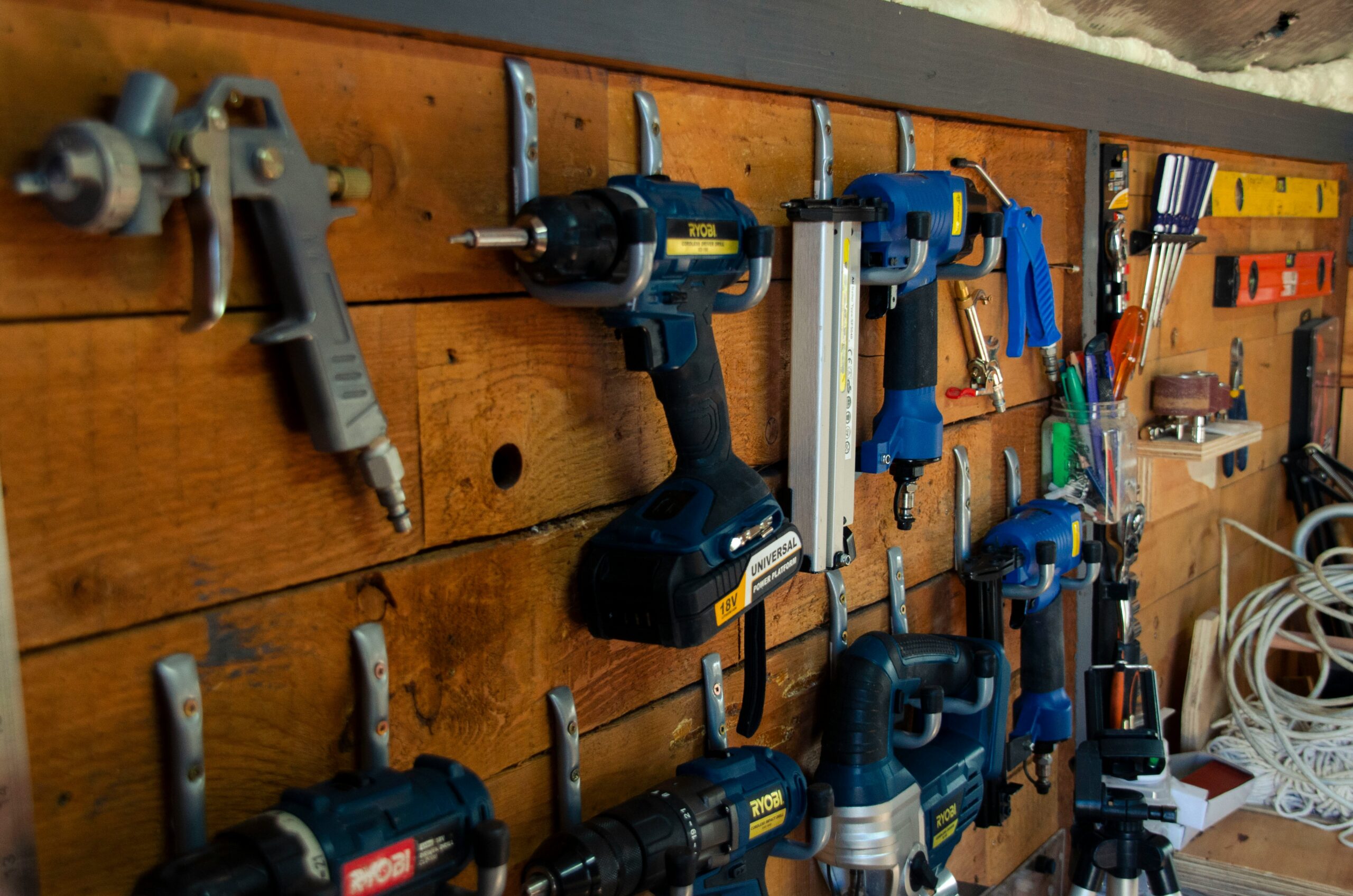
What Are Power Tools?
Power tools are tools that require an external power source. They are operated on electricity (corded or cordless), air (pneumatic), or gas.
Power tools are commonly used to speed up tasks, improve precision, and reduce physical strain on users. They produce more efficient and accurate results than manual labor, making them a crucial component of any professional’s or DIYer’s toolset.
According to a study named ‘ERGONOMIC AND SAFETY IMPROVEMENTS OF POWER TOOLS’ stated that compared to hand tools, engine-driven machines significantly reduce the frequency of motion of the worker during processing the workpiece, which results in a minimal fatigue.
How Do Power Tools Work?
Power tools work by transforming an external energy source (such as electricity, compressed air, or gasoline) into mechanical motion (such as rotation, vibration, or impact) via motorized mechanisms in order to carry out tasks like drilling, cutting, sanding, etc. This process of conversion creates torque, impact force, oscillation, or high-speed motion.
These tools use a rotating blade or bit, a reciprocating action, or an oscillating mechanism to complete tasks more quickly and consistently.
Hand Tools vs Machine Tools vs Power Tools
Hand tools such as hammers, screwdrivers, and saws are basic devices that require users to operate them basically by hand. They provide excellent control and precision but demand more time and manual labor. Where power tools operate on mechanical mechanisms to provide more speed, efficiency & consistency and less fatigue than hand tools.
Machine tools are power-driven, stationary devices that are mostly used in industrial settings. They are used precisely and consistently to cut, shape, or mold materials, particularly metal. Where power tools can be both portable & stationary and work with a variety of materials like wood, metal, masonry, etc.
Why Do We Need Power Tools?
An important aspect of power tools is their ability to increase productivity, flexibility, force, and precision in a variety of tasks. Power tools save time and effort by simplifying tasks. They make it possible to finish jobs more quickly, which boosts productivity. They guarantee high-quality work by providing accuracy and consistency.
These tools are used in construction, woodworking and carpentry, metalworking and fabrication, automotive repair and maintenance, electrical work, plumbing, home improvement and DIY, HVAC installation and maintenance, landscaping and gardening, shipbuilding and aerospace, mining and heavy industry, maintenance and repair services, etc.
According to a study named “Health and productivity impact of semi-automated systems” stated that tool-assisted systems can reduce physical strain by ~40% and increase productivity by ~10%.
Classification of Power Tools
Power tools are broadly classified into two main categories: portable power tools and stationary power tools. Each category has their own advantages depending on the nature of the task, work environment, and level of precision required.
Portable power tools
Portable power tools are handheld tools that provide maximum flexibility and mobility on the task. Their portability enables users to use them in tight areas and remote job sites, making them handy for both professionals and DIY enthusiasts.
Drills, circular saws, sanders, grinders, nail guns, jigsaws, and routers are some common examples. Drills make holes or drive screws into wood, metal, or masonry, whereas circular saws provide quick, straight cuts through lumber and sheet materials. Sanders smooths out surfaces and removes paint, and grinders are flexible instruments for cutting, grinding, and polishing hard materials.
Battery technology advancement has increased the value of portable tools. It provides longer run durations, faster charging, and ergonomically built bodies that reduce user fatigue during prolonged usage.
Stationary power tools
Stationary power tools remain fixed in place. They are designed for high-powered, increased stability, control, and precision-driven tasks. Unlike portable tools, in the case of stationary tools, users need to bring the workpieces to the tool. Common examples are table saws, band saws, drill presses, and jointers.
Table saws and band saws are crucial in woodworking and metalworking because they allow for precise, repeatable cuts through heavy or large materials. Drill presses produce regular, accurate holes at specified depths, whereas jointers flatten and square lumber edges to provide flawless joints.
The powerful motors featured in stationary tools provide considerable torque. This torque provides for efficient material removal even through the most difficult workpiece. Their fixed design reduces vibration, making them the best choice for fine, detailed crafting.
Classification of Power Tools Based on Power Sources
Power tools use various mechanisms based on the power source. Let’s break down three power sources of power tools:
- Electric Power Tools
These tools run on electricity, either by a cord or a battery. They convert electrical energy into mechanical energy, enabling the tool to perform operations such as drilling, cutting, and sanding. Electric power tools can be corded (require a direct connection to an electrical outlet) or cordless (run on rechargeable batteries).
Corded & Cordless
Cordless power tools use rechargeable battery packs (usually lithium-ion, NiMH, or Ni-Cd). These batteries store and deliver electrical energy to the tool. Cordless tools are mostly portable.
Corded power tools receive power directly from a wall outlet through cords (AC power supply). Corded tools are mostly stationary.
Battery Platforms of Cordless Tools
Cordless tools have three primary battery types: nickel-cadmium (NiCD), nickel-metal hydride (NiMH), and lithium-ion (Li-ion).
- Nickel-Cadmium Battery (NiCd) – This platform transfers chemical energy to electrical energy when discharged and back to chemical energy when recharged, allowing it to charge its cycle multiple times. NiCd batteries can last up to 1,000 cycles, but they have a high memory effect if not regularly maintained.
- Nickel-Metal Hybride Battery (NiMH) – These battery platforms work as rechargeable cells that store energy by transferring hydrogen atoms from a positive nickel oxyhydroxide electrode to a negative metal hydride alloy. NiMH batteries can last up to 500-800 cycles, but they also have a memory effect (less than a NiCd battery).
- Lithium-Ion Battery (Li-ion) – These battery platforms work by discharging lithium ions from the positive electrode, which flow through the electrolyte to the negative graphite electrode and settle there. These batteries then absorb these ions and store the energy. Li-ion batteries can last up to 300-500 cycles and have no memory-related effects. Li-ion batteries are more preferred nowadays for their advanced features.
Benefits of electric power tools
- Corded power tools are typically more powerful and can operate for extended periods of time. They are suited for ongoing activities like heavy-duty cutting and refinishing.
- Cordless power tools provide increased portability and flexibility. These tools are suitable for chores and projects that necessitate mobility.
Weaknesses of electric power tools
- Corded power tools have the obvious disadvantage of being less portable. Their portability depends on the lengths of the cord attached. These tools can’t operate without an AC power source or generator.
- Cordless power tools are prone to power loss. As the battery runs low, performance suffers. These power tools are not designed to handle heavy-duty projects.
- Pneumatic Power Tools
Pneumatic tools are powered by compressed air. These tools are commonly known as air-powered tools. A compressor pairs with them, which pumps air through the tool to propel its action. These tools are frequently used in workplaces to power impact wrenches, polishers, snips, grinders, nail guns, and hammers. They are known for their high efficiency and power. They are especially handy for torque-intensive tasks like car maintenance and construction.
Benefits of Pneumatic power tools
- Pneumatic tools have great torque and minimal to no power fade when the jobs require power.
- They are typically lighter than electric tools and more durable for long-term use.
- They limit the risk of sparks, and are appropriate for situations such as auto shops or factories.
Weaknesses of Pneumatic power tools
- Pneumatic tools require a compressor to operate, which can be hefty because stationary compressors normally use electric power whereas portable compressors use gasoline, diesel, or batteries.
- Compressors and air exhaust of pneumatic tools can be very noisy.
- Air lines and compressors require frequent maintenance to avoid leaks, moisture buildup, and pressure problems.
- Gas Power Tools
Gas-powered tools operate on gasoline or a gas/oil mix. They use an internal combustion engine which converts fuel into mechanical action. These tools are extremely portable. Some common gas-powered tools are chainsaws, lawnmowers, trimmers, tillers, augers, etc. They serve heavy-duty applications that require a lot of power such as outdoor labor, landscaping, and construction.
Benefits of Gas power tools
- Gas tools provide more power and torque, making them excellent for heavy-duty applications such as cutting thick materials or large-scale building work.
- No need for cords or electricity which makes these tools suitable for usage in isolated or outdoor areas.
- Built to withstand tough climates and demanding situations over time.
Weaknesses of Gas power tools
- Gas tools release toxic chemicals such as carbon monoxide, which contribute to air pollution.
- They are louder (typically 90+ decibels) and produce greater vibration, which can induce fatigue.
- They require regular maintenance, such as gasoline mixing, oil changes, and engine checks. Ongoing fuel and maintenance charges might drive up long-term costs.
Essential Power Tools & Their Usage
Now that we’ve discussed possible power sources of power tools, let’s explore what the tools are & for what purposes they are used:
Drills & Drivers
The first major category of power tools is drills. Their main purpose is to make small or big holes and fasten screws or bolts into a surface. They may drill holes and fasten screws or bolts into a variety of materials, including wood, metal, and concrete.
- Twist Drill
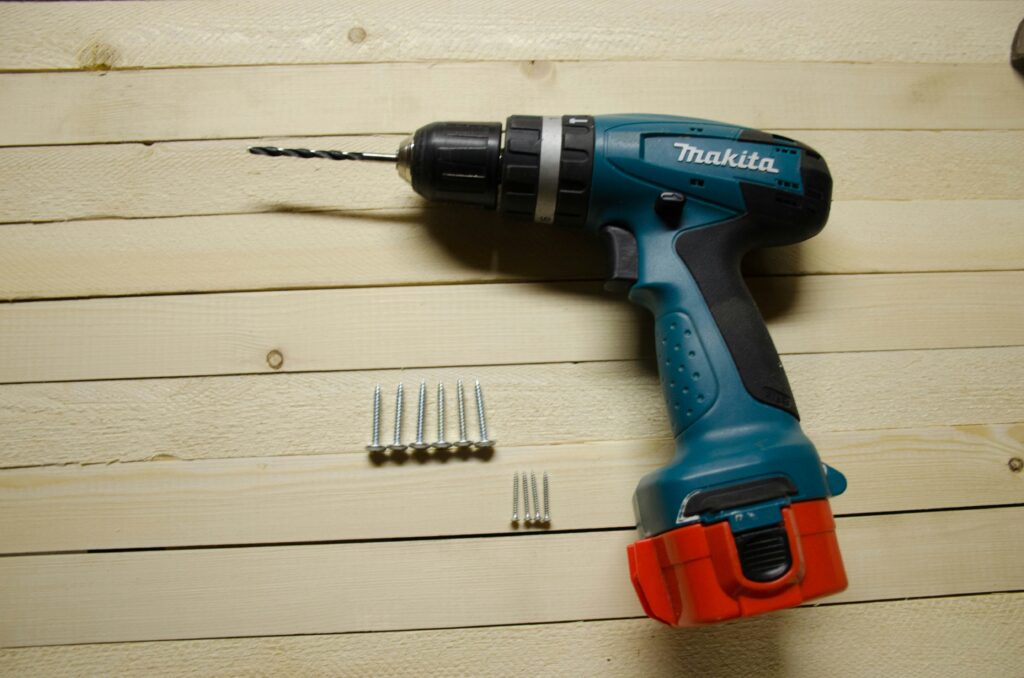
This is the most common type of drill. Twist drill has a rotating drill bit with spiral flutes that remove material as it cuts. It is used to drill holes in materials such as wood, metal, and plastic. It has a clutch system that can be adjusted to change the speed. Additionally, you can use screwdriver bits to tighten or loosen screws.
- Hammer Drill
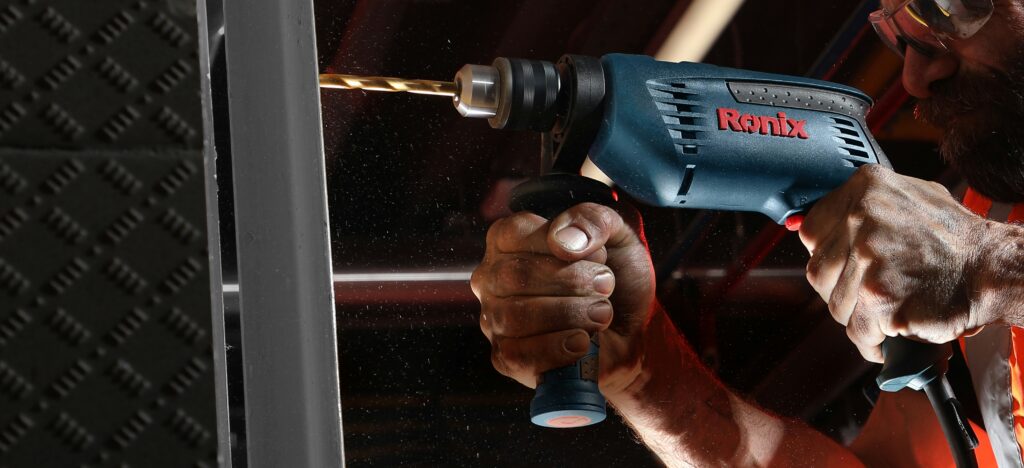
A hammer drill uses rotary motion and a quick hammering action to break through hard materials such as brick, masonry, and concrete. It is excellent for light to medium-duty tasks that require additional force beyond ordinary drilling. A hammer drill revolves and strikes the bit into the material. This drill is quite powerful and not suitable for all materials. This drill can only use bits that withstand the impact of a hammer drill.
- Rotary Hammer Drill
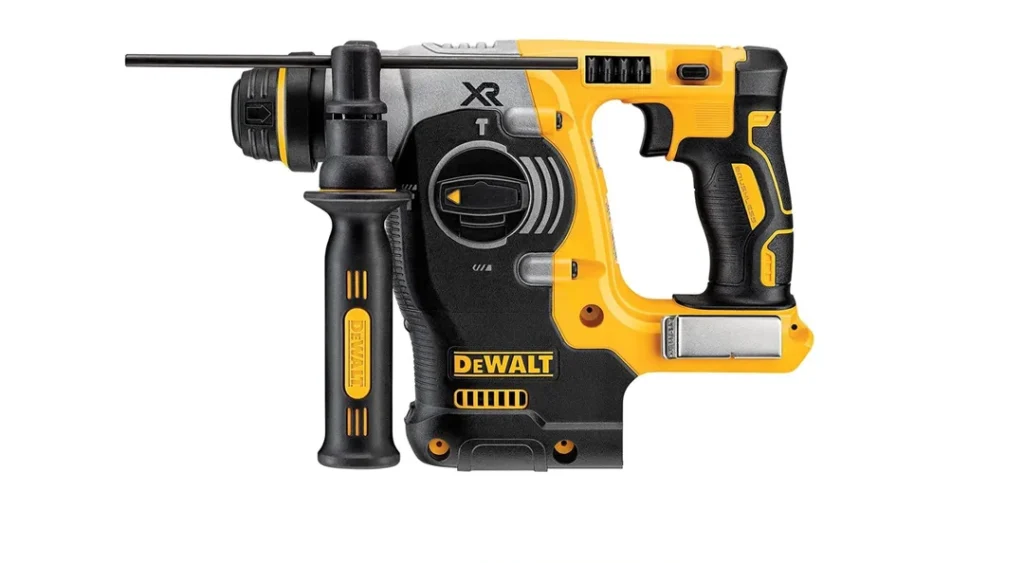
A rotary hammer drill is a heavy-duty tool that drills through resistant materials such as hardened concrete and stone. It uses a piston-driven mechanism to provide forceful hammer strokes, making it more effective and long-lasting than a typical hammer drill for tough jobs.
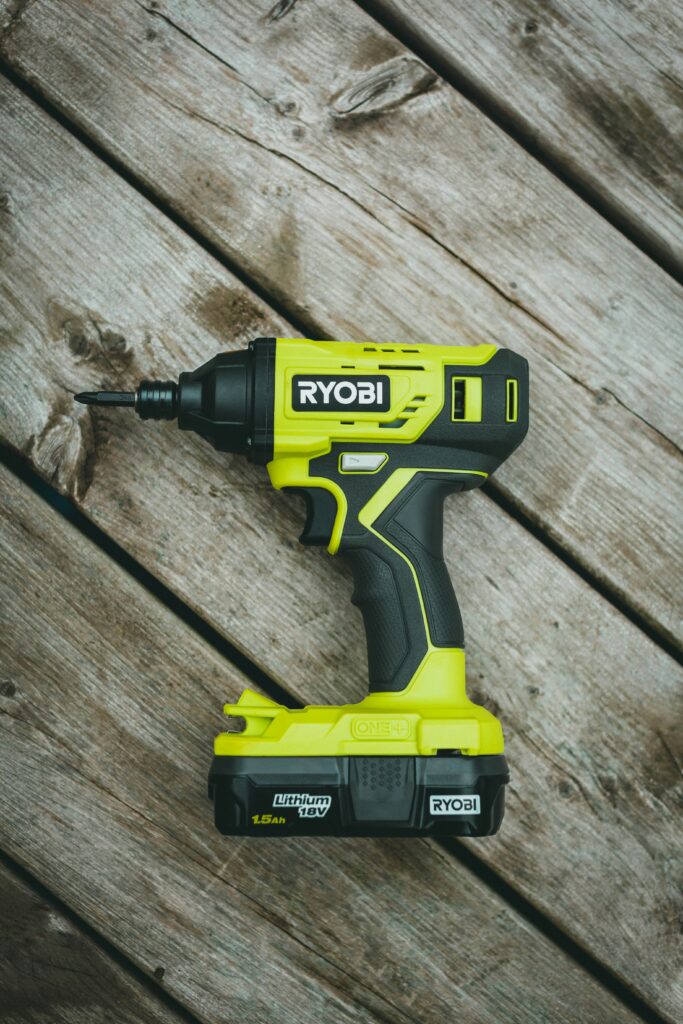
- Impact Driver
An impact driver generally drives screws, nuts, and other fasteners with high torque. It produces short-rotating bursts (impacts) that save user effort and prevent screws from peeling. This mechanism makes the tool ideal for heavy fastening and assembly jobs. An impact driver does not strike into the material, but rather delivers force as it spins.
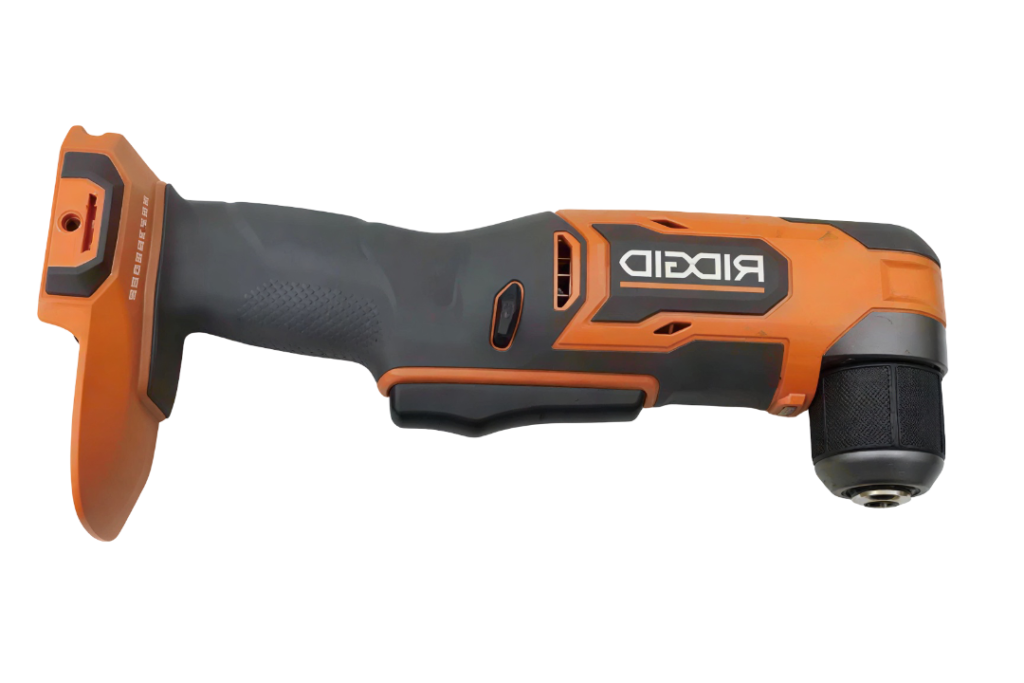
- Right-Angle Drill
A right-angle drill has a small head that sits at a 90-degree angle to the body. This mechanism allows the tool to fit into narrow or constricted locations that regular drills cannot. It is often used in plumbing and electrical work.
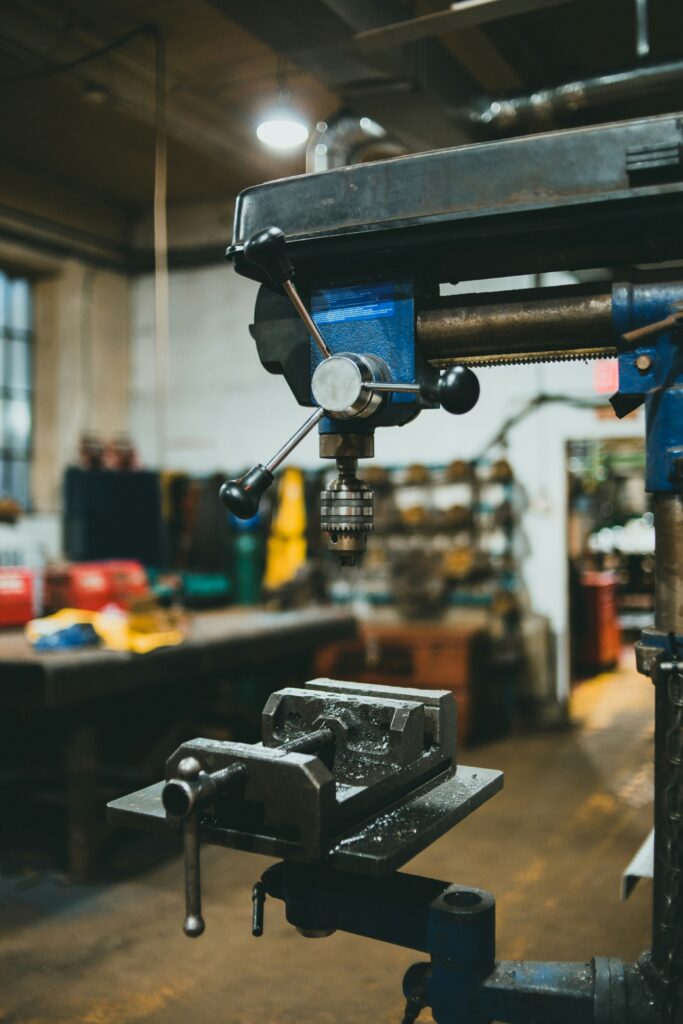
- Drill Press
A drill press is a stationary power tool that holds the workpiece in place while a vertically aligned drill bit goes down to drill holes with accuracy. This tool is used for accurate and repeatable drilling for workshop jobs.
Saws
Saws are another versatile category of power tools. They are used for straight cutting & general construction, angle & precision cutting, heavy-duty & outdoor cutting, curved & detailed cutting, etc.
Straight cutting & general construction saws are used for fast, straight cuts in wood and constructing materials.
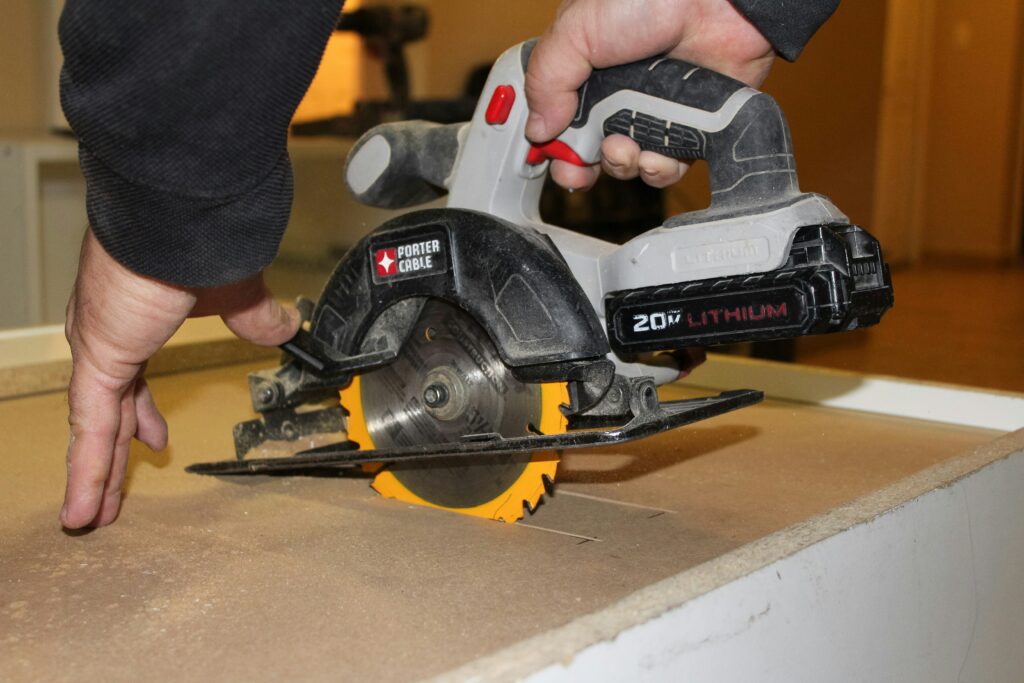
- Circular Saw
A circular saw is a handheld power tool with a spinning circular blade. This saw is designed for quick, straight cuts in wood, plywood, and other materials. It is commonly used in construction, carpentry, and DIY projects due to its portability. It has the ability to handle huge sheets well.
- Track Saw
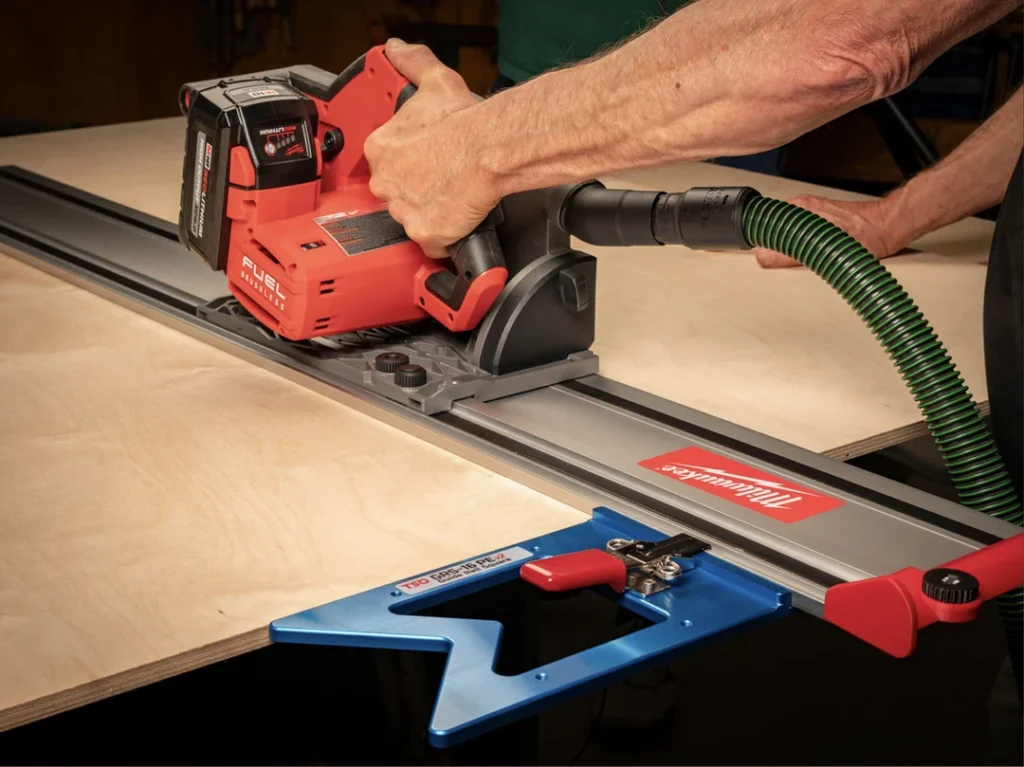
Track saw is a precision version of circular saw that runs along a guided track. This saw is designed for straight, splinter-free cuts. It is suitable for cutting large panels with high accuracy. It is commonly used in cabinetry, woodworking, and professional tasks where clean edges are required.
- Table Saw
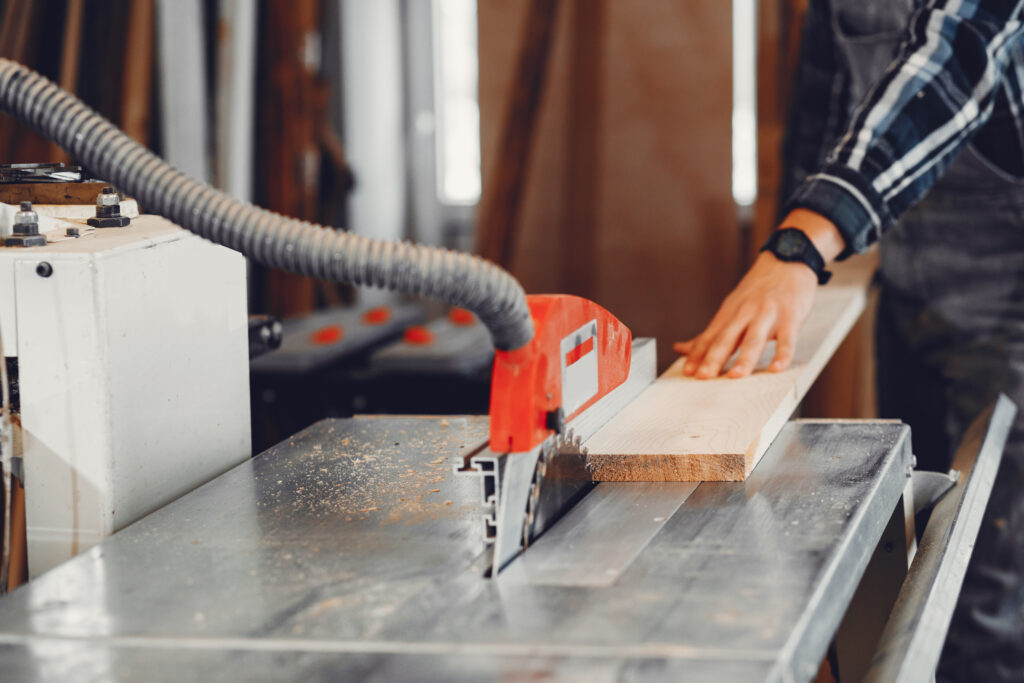
A table saw is a stationary saw with circular blades installed beneath a flat table surface. This arrangement allows users to push the material for constant & accurate cuts. This saw is used in workshops for rip cuts, crosscuts, and other repetitive jobs that require precision and stability.
Angle & Precision cutting saws are best for angled, crosscuts, and detailed precision work.
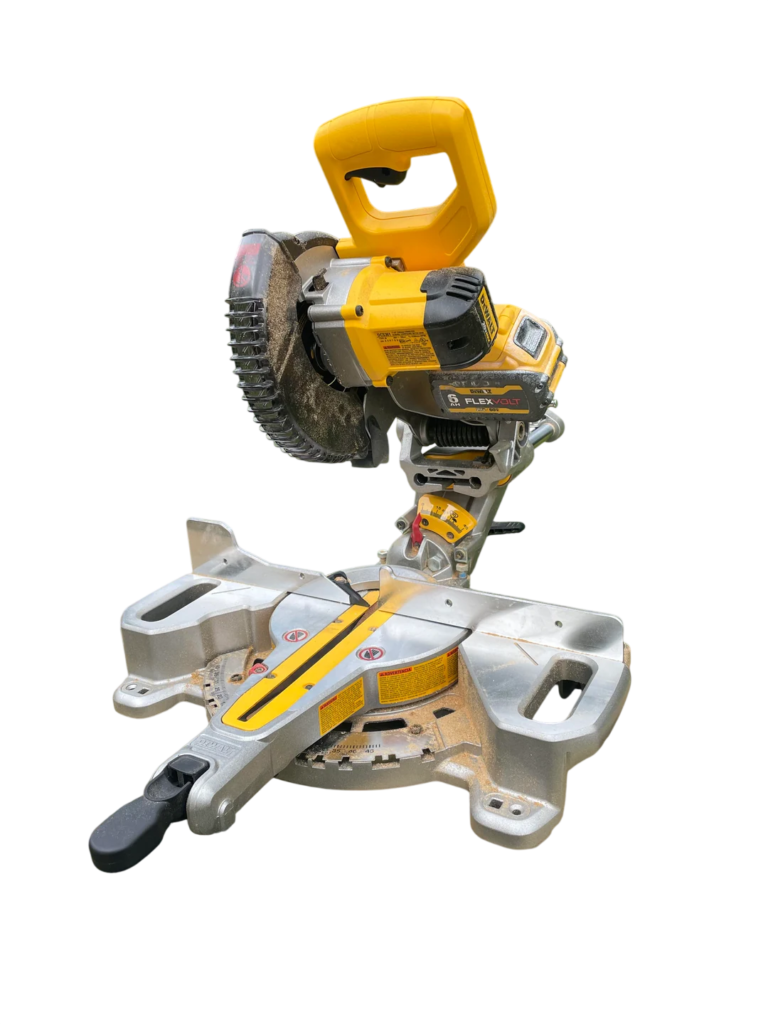
- Miter Saw
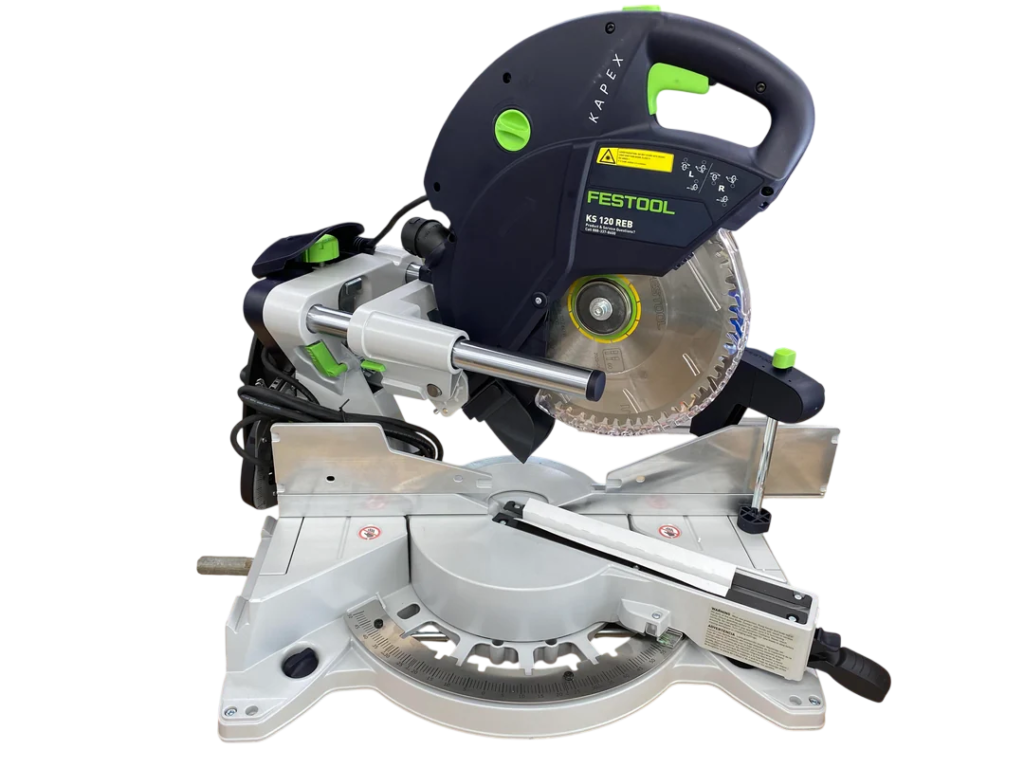
A miter saw is a special saw that provides precise crosscuts and angled cutting. It is especially used for trim work, molding, and framing. Its rotating blade enables users to easily cut at specific angles which makes it ideal for woodworking and finishing applications.
- Compound Miter Saw
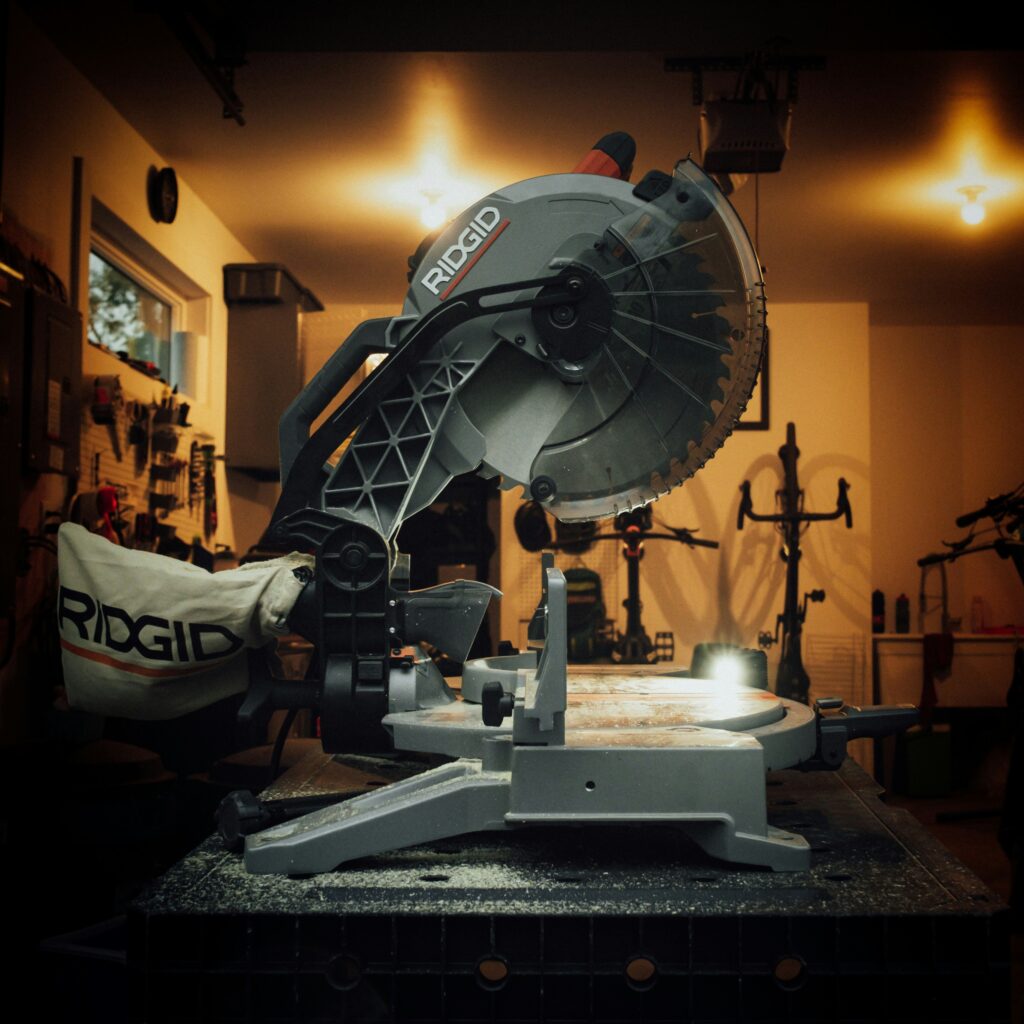
Compound miter saw is an advanced type of miter saw that can tilt and rotate which allows both miter and bevel cuts at the same time. It is ideal for complicated angle cuts in crown molding, furniture manufacturing, and complex carpentry applications that require high precision.
- Chop Saw
Chop saw is a heavy-duty cutting saw that makes straight downward cuts in tough materials such as metal, pipelines, and thick wood. It is commonly used in construction and manufacturing. It provides powerful & rapid cuts, but is generally limited to straight angles.
Heavy-Duty & Outdoor Cutting Saws are ideal for rough, large-scale, or outdoor cutting tasks.
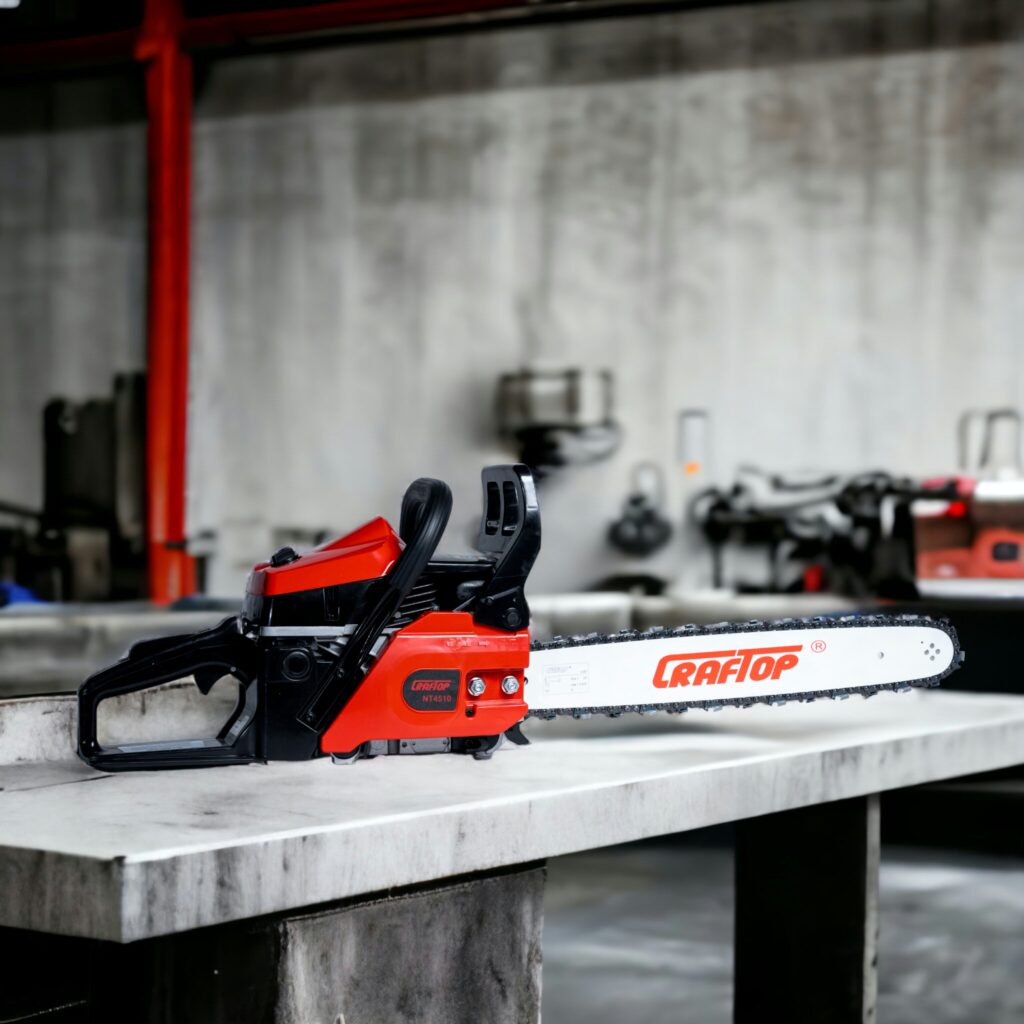
- Chainsaw
A chainsaw is a powerful saw with a spinning chain of sharp teeth that cuts mostly through trees, logs, and thick branches. It is commonly used in forestry, landscaping, and construction for heavy-duty outdoor cutting operations that require a lot of power.
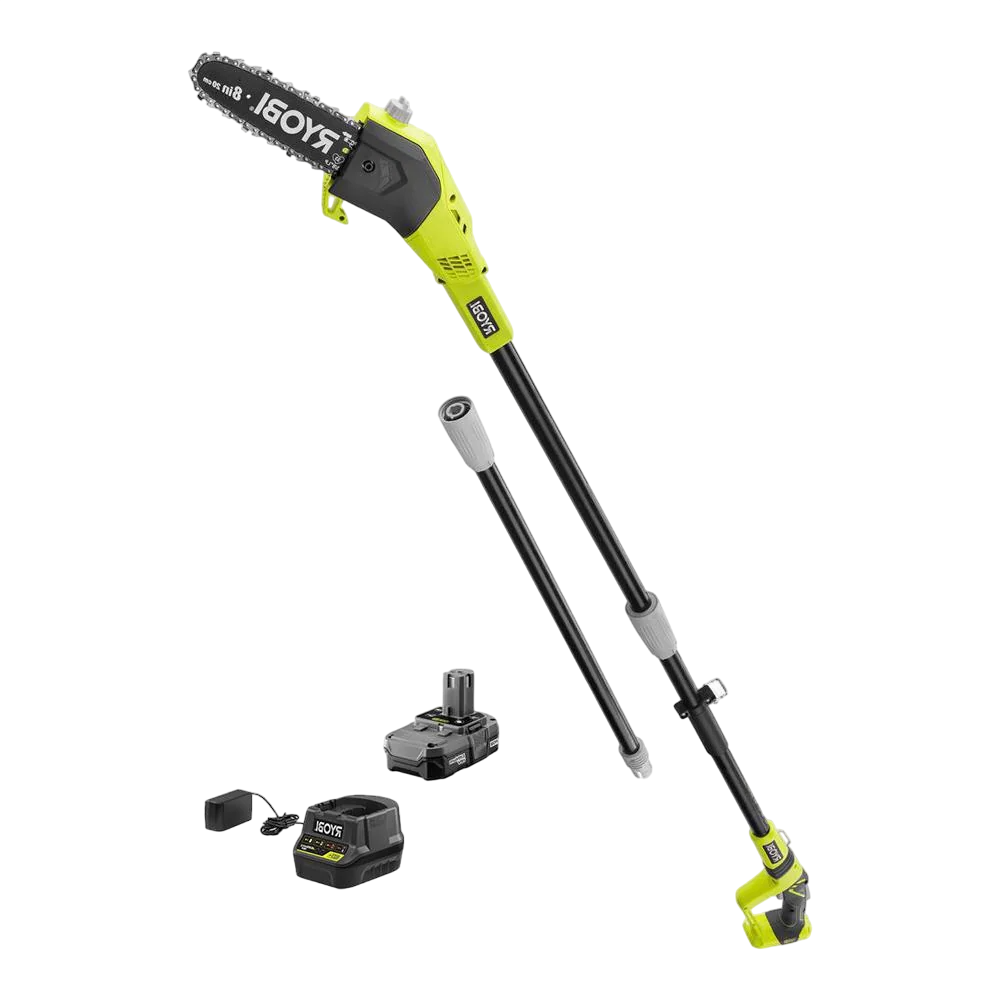
- Pole Saw
Pole saw is a kind of chainsaw that allows users to trim high branches without using ladders. It allows users wider access and controlled cutting from the ground. It increases safety and convenience in landscaping and tree maintenance.
Flooring & material-specific saws specialize in particular materials or applications.
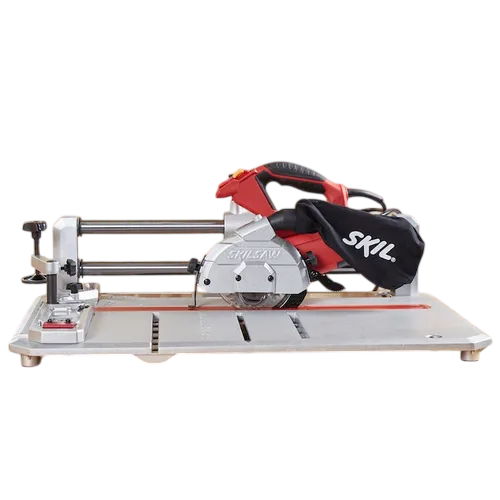
- Flooring Saw
Flooring saw is specifically designed for cutting flooring materials like laminate, hardwood, and vinyl. It produces precise cuts with minimal dust. This feature makes it ideal for installation projects requiring accuracy and finish quality.
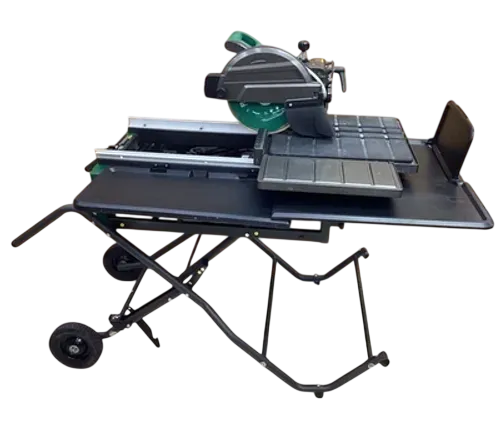
- Tile Saw
The tile saw has a diamond blade and a water cooling system. This design allows it to cut through ceramic, porcelain, and stone tiles. It minimizes overheating and chipping, which results in smooth & precise cuts required for professional tiling and renovation projects.
Curved & detailed cutting saws are ideal for intricate shapes, curves, and fine work.
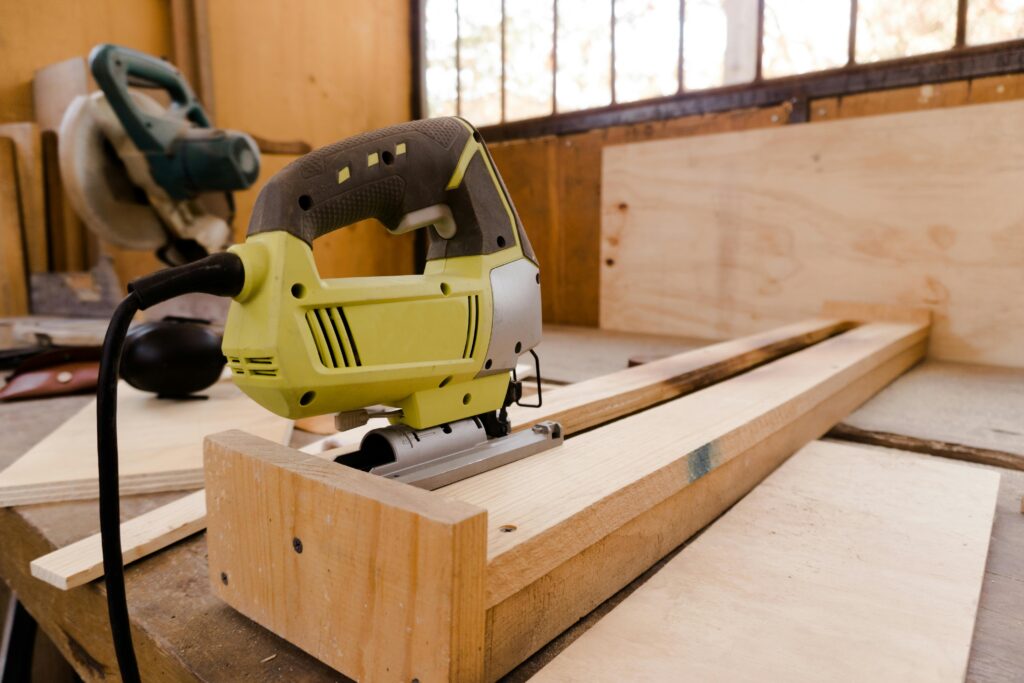
- Jigsaw
Jigsaw is a handheld saw with a reciprocating blade that goes up and down. This mechanism allows users to cut curves, angles, and complicated shapes. It is extremely versatile and is widely used in woodworking, metalworking, and DIY applications that require flexibility.
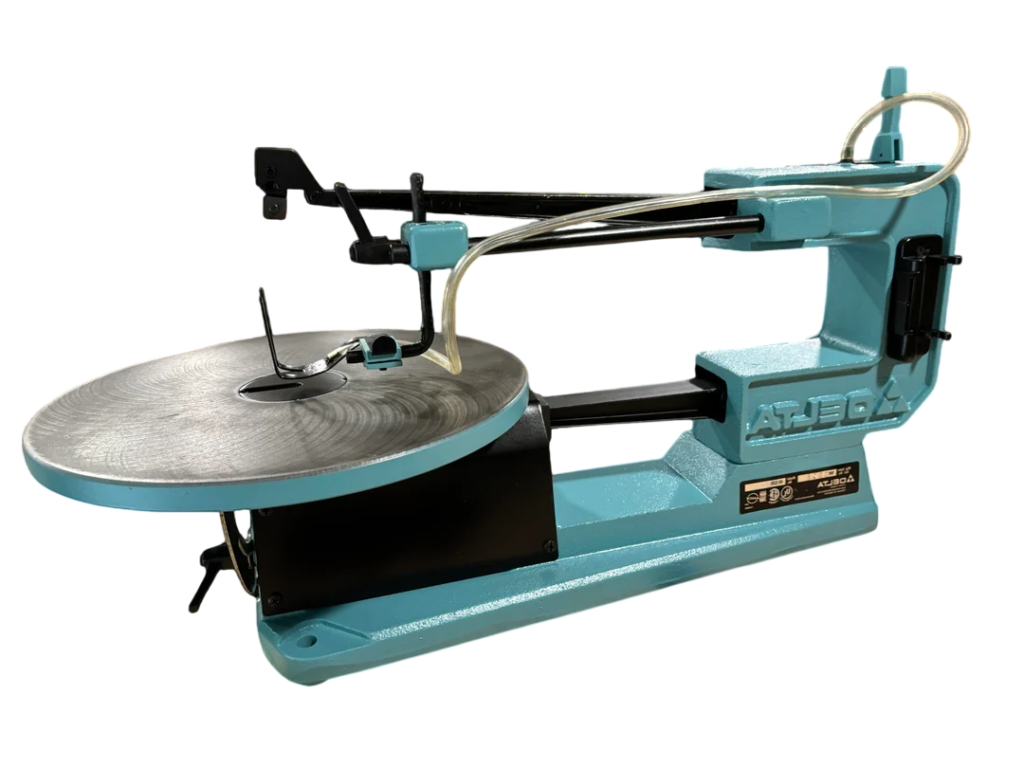
- Scroll Saw
Scroll saw is a stationary saw that makes fine, detailed cuts in thin materials such as wood, plastic, or metal. It is best suited for detailed crafting, decorative work, and patterns where precision and control are more critical than cutting speed.
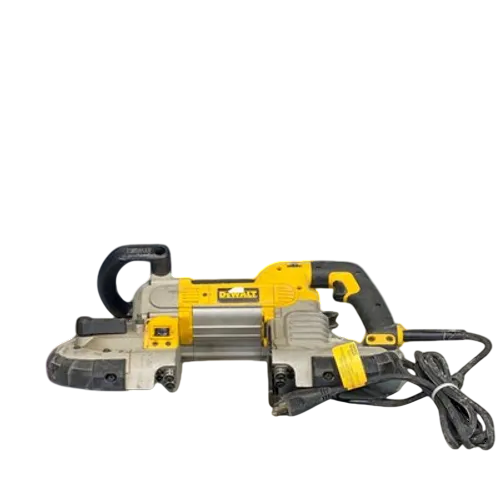
- Band Saw
The band saw has a continuous loop blade stretched between two wheels. It is capable of both straight and curved cuts. It is commonly used in woodworking and metallurgy to cut through thick materials and produce smooth, consistent shapes.
Demolition & versatile cutting saws are used for rough cuts, demolition, and multi-purpose tasks.
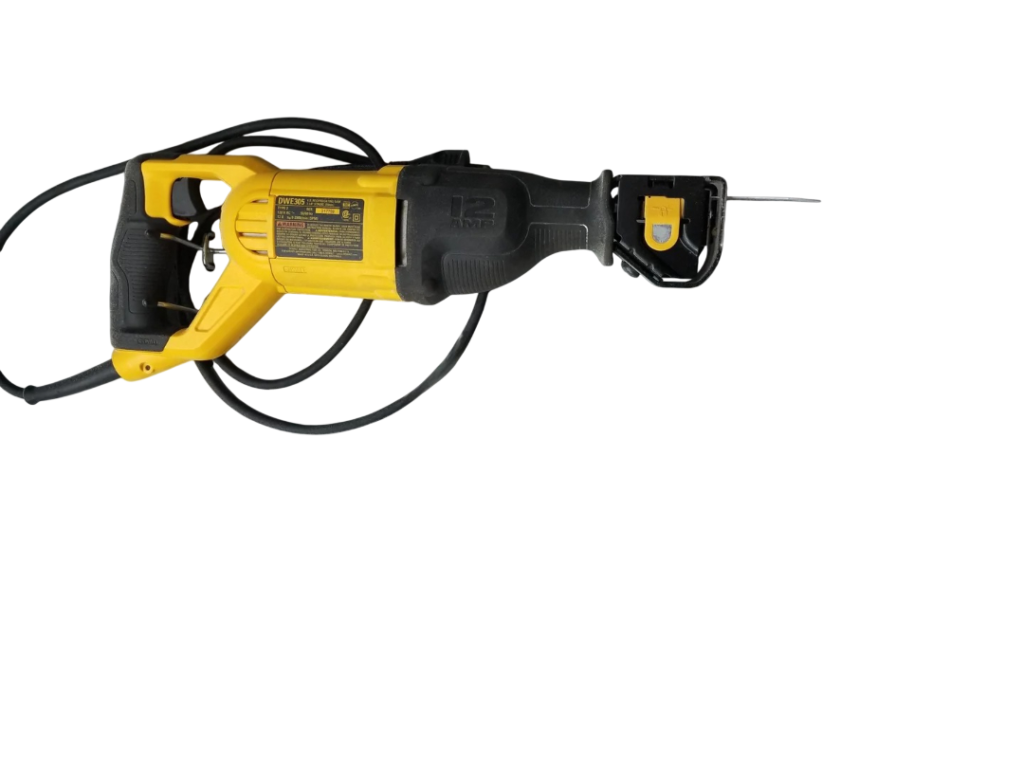
- Reciprocating Saw
The reciprocating saw has a push-and-pull blade motion ideal for demolition and tough cutting jobs. It can cut through wood, metal, and plastic. It is excellent for construction, renovation, and other applications where precision is not necessary.
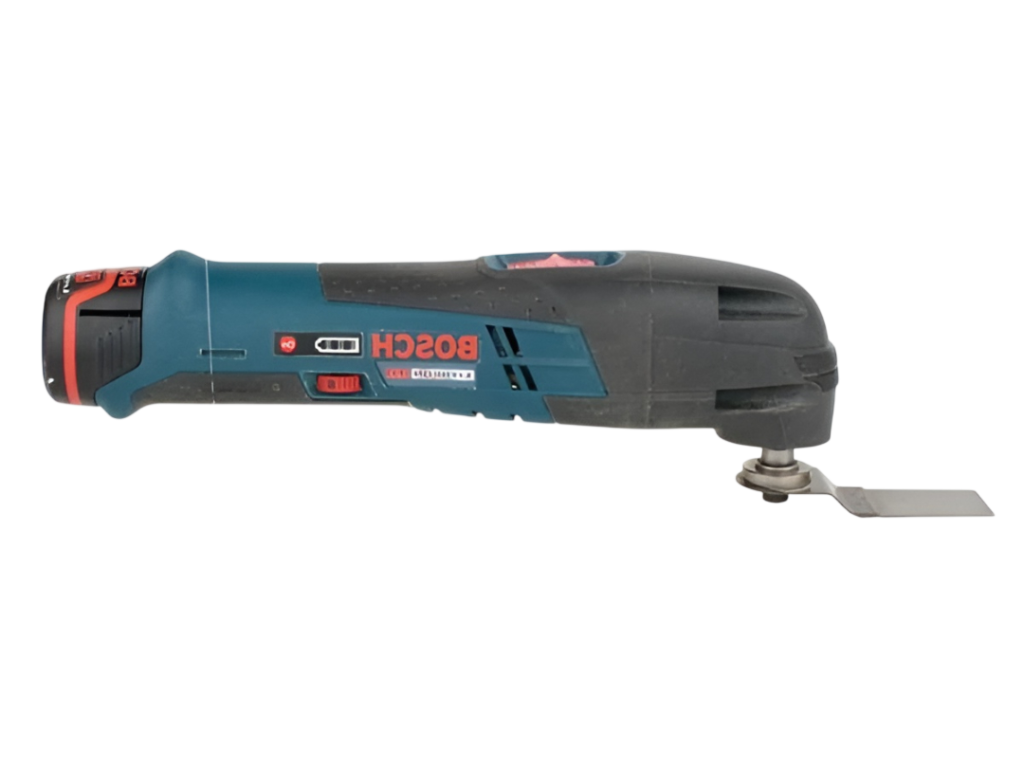
- Oscillating Multi-tool
An oscillating multi-tool is a multi-purpose saw. This tool has a fast vibrating blade for cutting, sanding, scraping, and grinding. It works well in narrow or difficult-to-reach locations. It is frequently used in repair, remodeling, and detailed finishing chores.
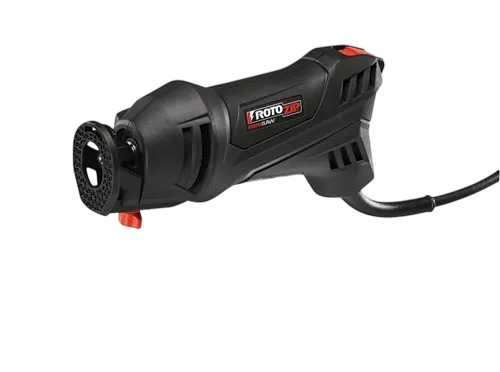
- Spiral Saw
Spiral saw is a tiny rotary cutting saw. This saw has a high-speed rotating bit that can cut in any direction. It is great for making plunge cuts and precise shapes in drywall, wood, and tile. It provides precision and versatility in small places.
Grinders
Grinders use high-speed rotating abrasive discs and wheels to cut, shape, and polish metal and stonework.
- Angle Grinder
An angle grinder is a multifunctional portable tool. It works by rotating an abrasive disc at a right angle to the motor. An angle grinder is also known as a disc grinder. This tool produces sparks while cutting so safety gear is a must.
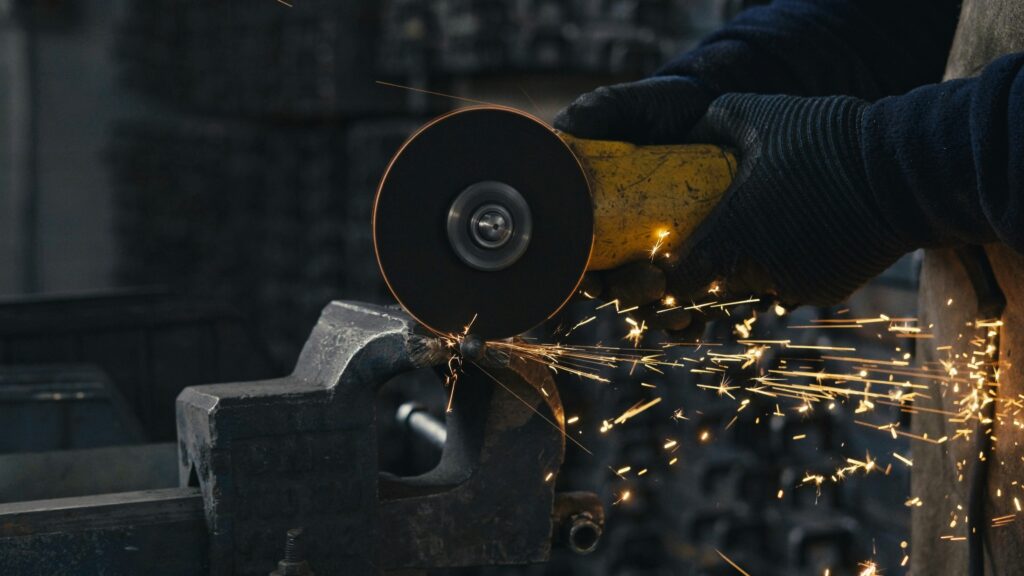
It is widely used for cutting concrete, stone, & metal; grinding welds, polishing surfaces, and eliminating rust. It is useful for construction, metalworking, and repair work.
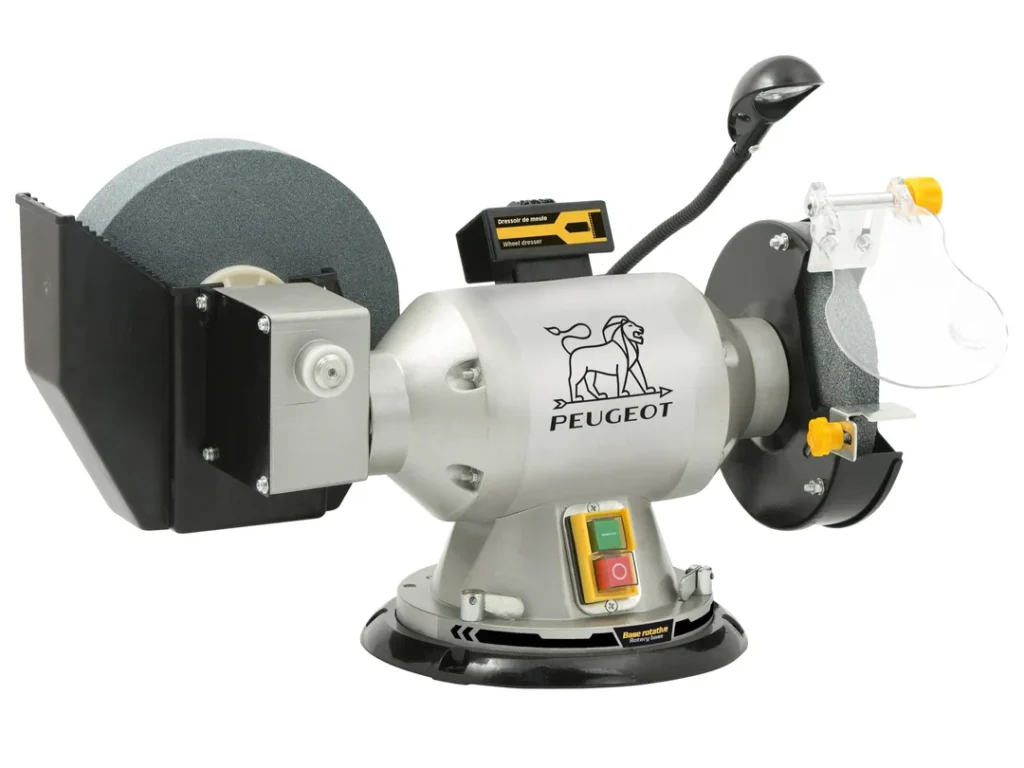
- Bench Grinder
A bench grinder is a stationary tool mounted on a workbench. This grinder has two spinning grinding wheels. It is primarily used for sharpening tools, shaping metal, and smoothing rough edges. It offers stability, precision, and control for workshop-based grinding and finishing applications.
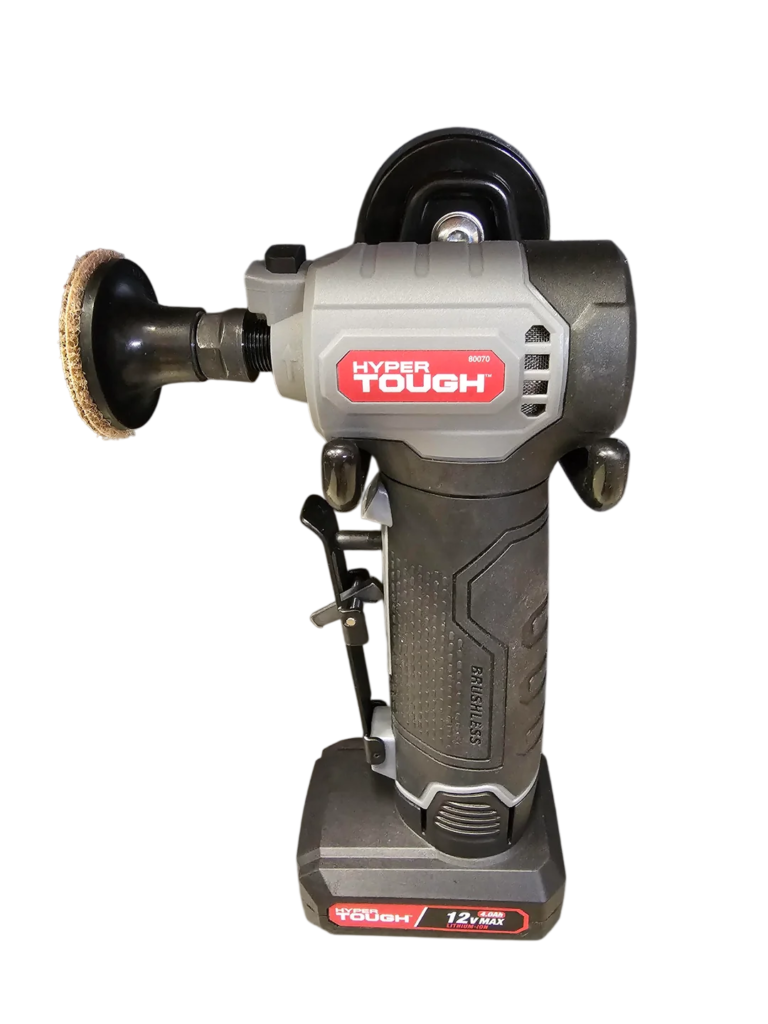
- Die Grinder
A die grinder is a handheld rotary tool. It is used to grind, polish, and shape metal or other materials. It works at fast speeds and is often used in metallurgy, automotive repair, and meticulous finishing.
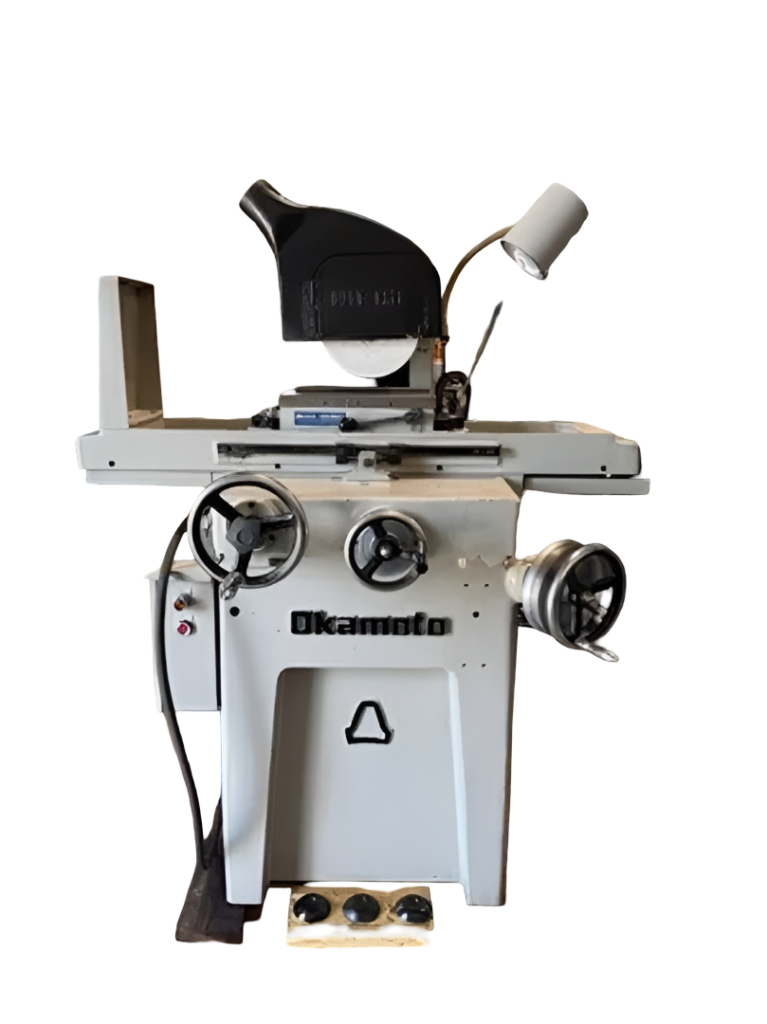
- Surface Grinder
A surface grinder is a precision tool that produces smooth, flat surfaces on metal workpieces. It works by moving an abrasive wheel across the material.
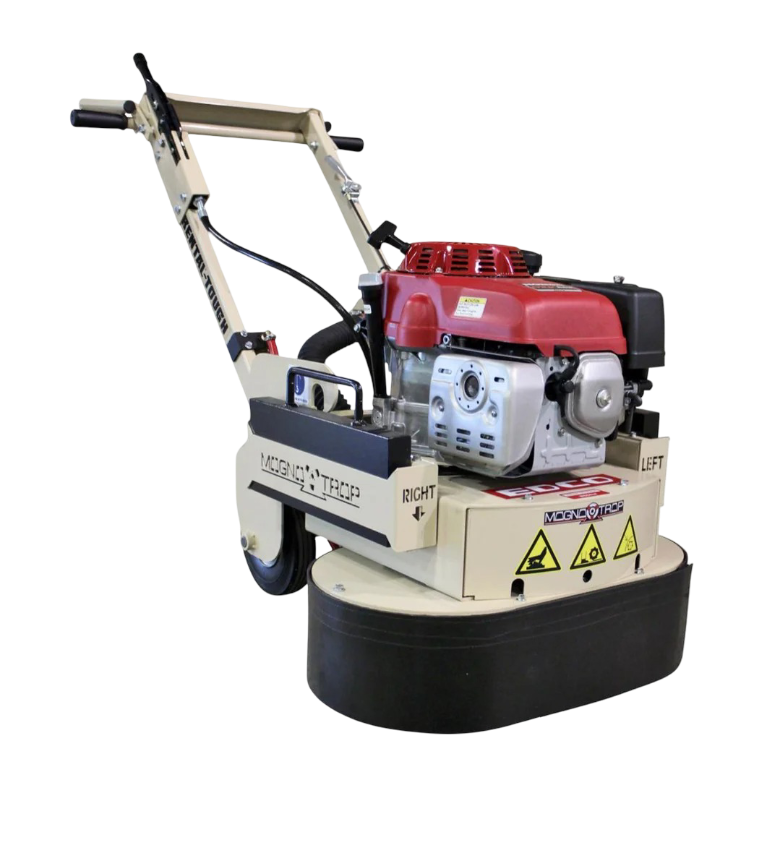
- Floor Grinder
A floor grinder is a heavy-duty tool. It is used for smoothing, polishing, or preparing concrete and stone surfaces. It is often utilized in building and restoration projects to create flat flooring surfaces.
Sanders
A sander polishes a surface by moving abrasive materials. It is used to smooth uneven rough edges and surfaces in materials like wood, metal, and plastic. It also removes paint.
- Belt Sander
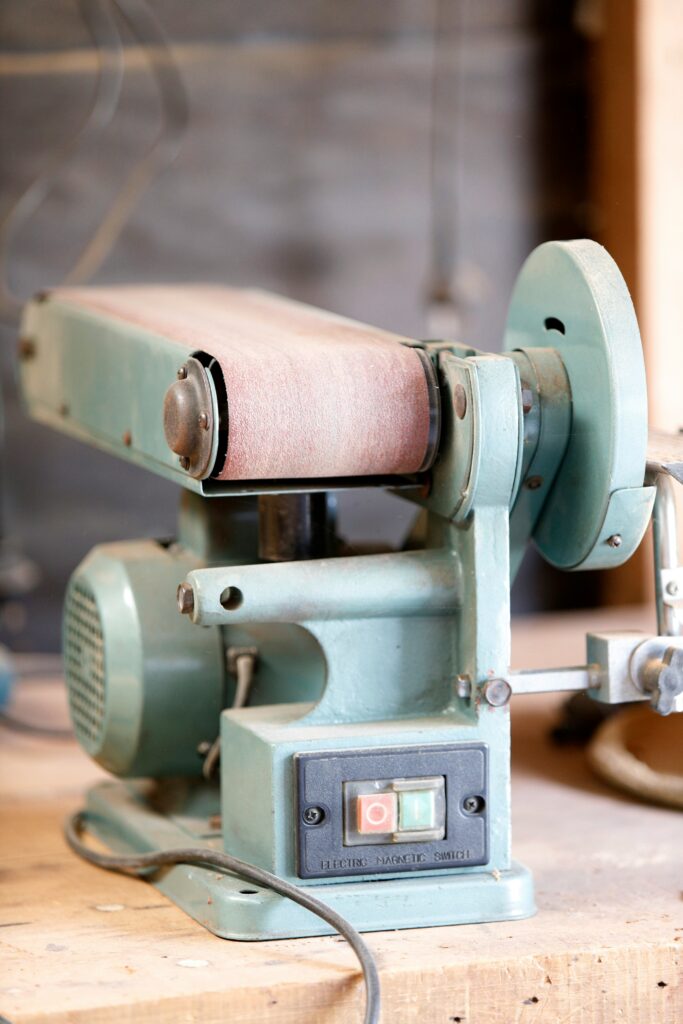
A belt sander works by stretching a continuous loop of sandpaper over two revolving drums. This sander is extremely effective for quickly removing material. It is good for flattening big surfaces, peeling paint, and shaping wood. It is often used in heavy-duty sanding and initial surface preparation jobs.
- Orbital Sander
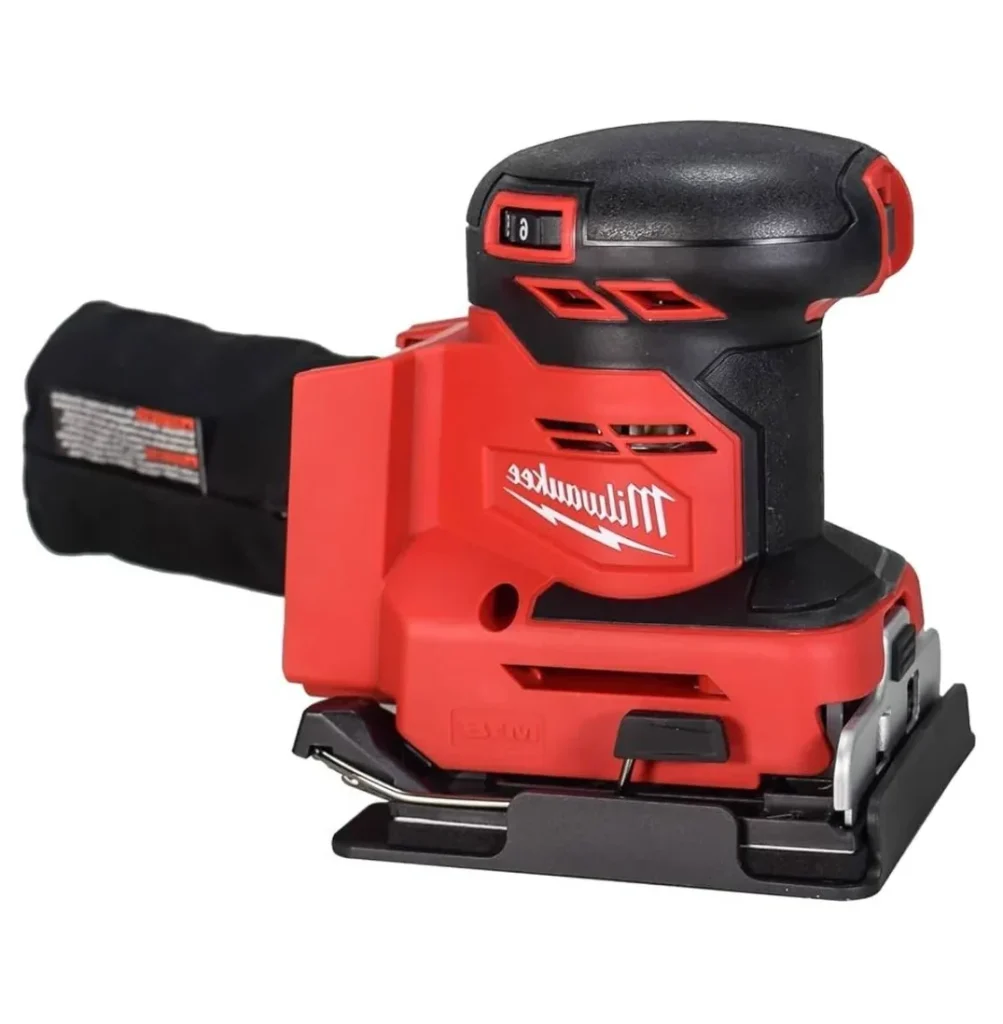
An orbital sander moves the sanding pad in small circular orbits which results in a smooth and controlled sanding operation. It is ideal for mild sanding, finishing work, and prepping surfaces between layers of paint.
- Random Orbital Sander
A random orbital sander combines circular and random action to reduce obvious swirl marks. This sander provides a smoother finish. It is useful for both material removal and precise finishing. It is a popular sander for woodworking and DIY projects.

Fastening Tools
Fastening tools bond materials quickly and securely using nails, staples, bolts, and rivets.
- Nail Gun
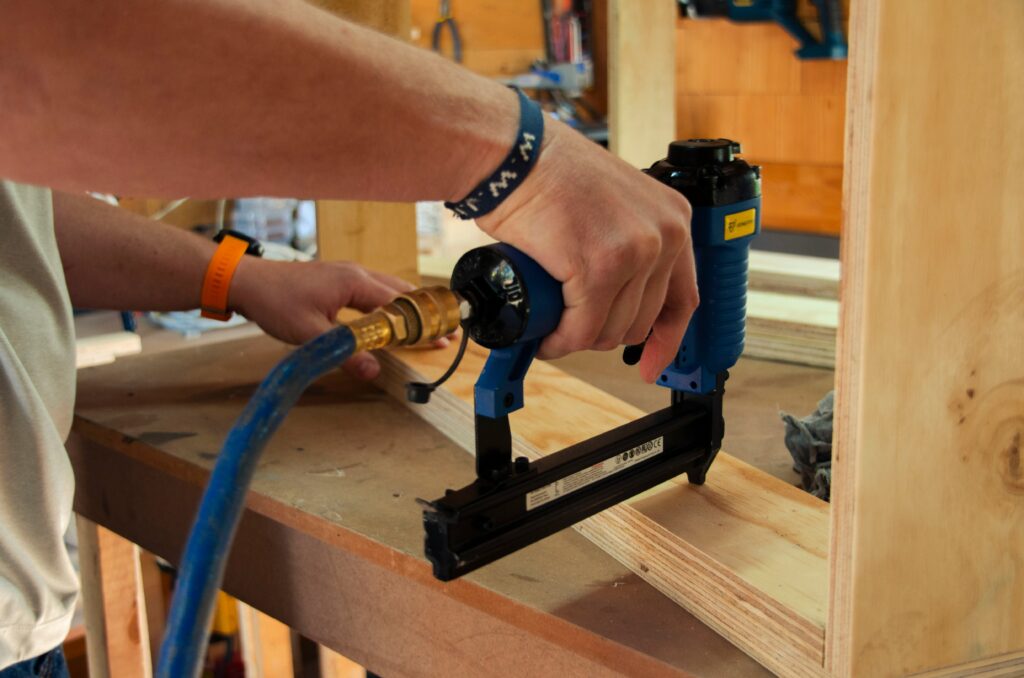
A nail gun is an electric, gas, or air-powered tool. It drives nails into materials. It can handle a variety of nail sizes depending on the task at hand. This tool is especially beneficial when users need a large number of the same-sized nails, such as when laying shingles or installing finished trim.
- Rivet Gun
A rivet gun puts in rivets that permanently connect materials like sheet metal. It is commonly used in construction, metalwork, and aerospace-style joints to provide vibration-resistant connections when welding or screws may not be appropriate.

- Impact Wrench
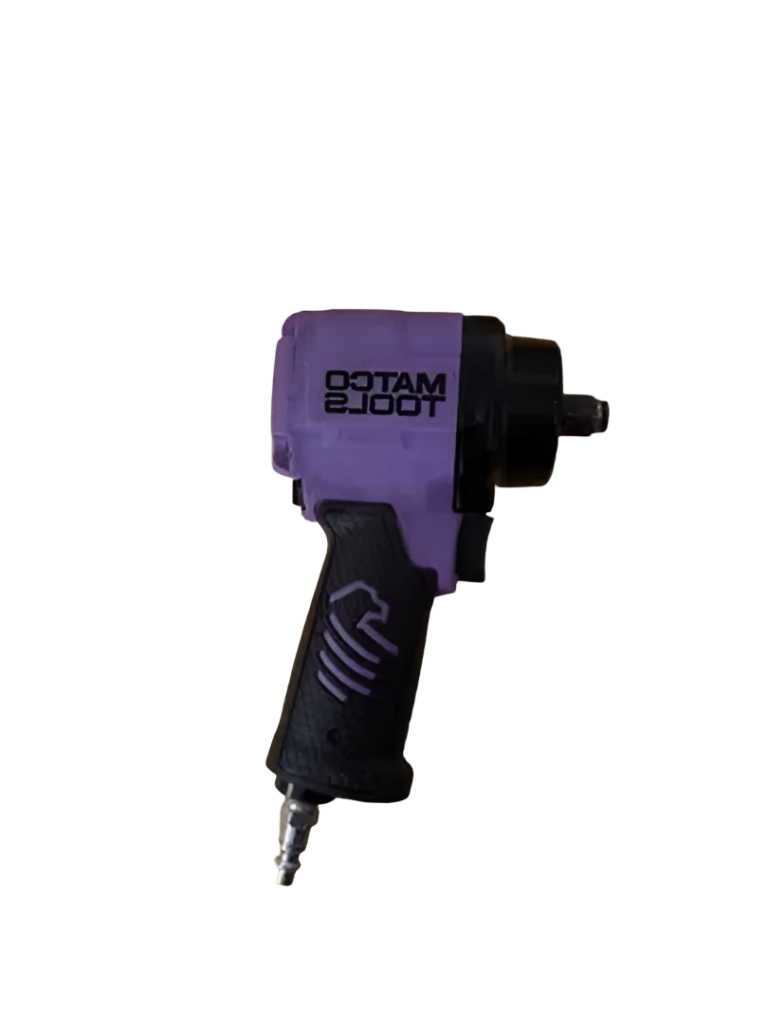
An impact wrench uses rotating force and impact bursts to generate high torque with minimal effort. It is often used to tighten or loosen lug nuts and hefty bolts. It is used in automotive and industrial sectors that require high fastening force.
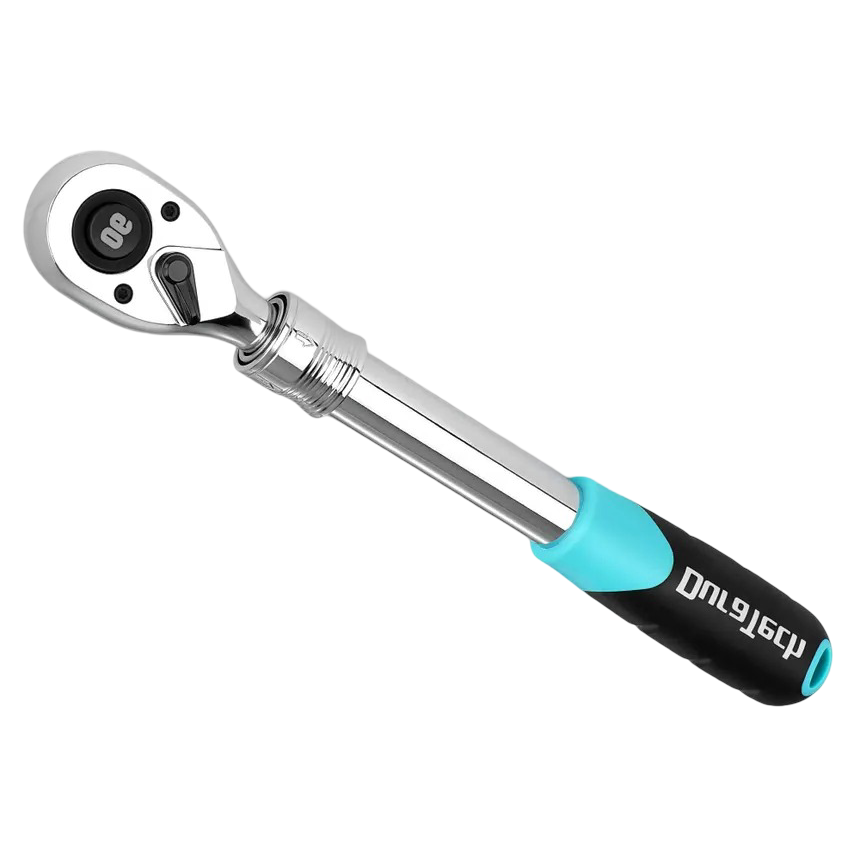
- Ratchet Wrench
An electric ratchet wrench automates an ordinary ratchet’s turning motion. It enables faster tightening and loosening of bolts and nuts. It is particularly effective in restricted space and repeated operations.
Routing Tools
Routing tools cut, carve, smooth, and mold materials such as wood into the desired shape.
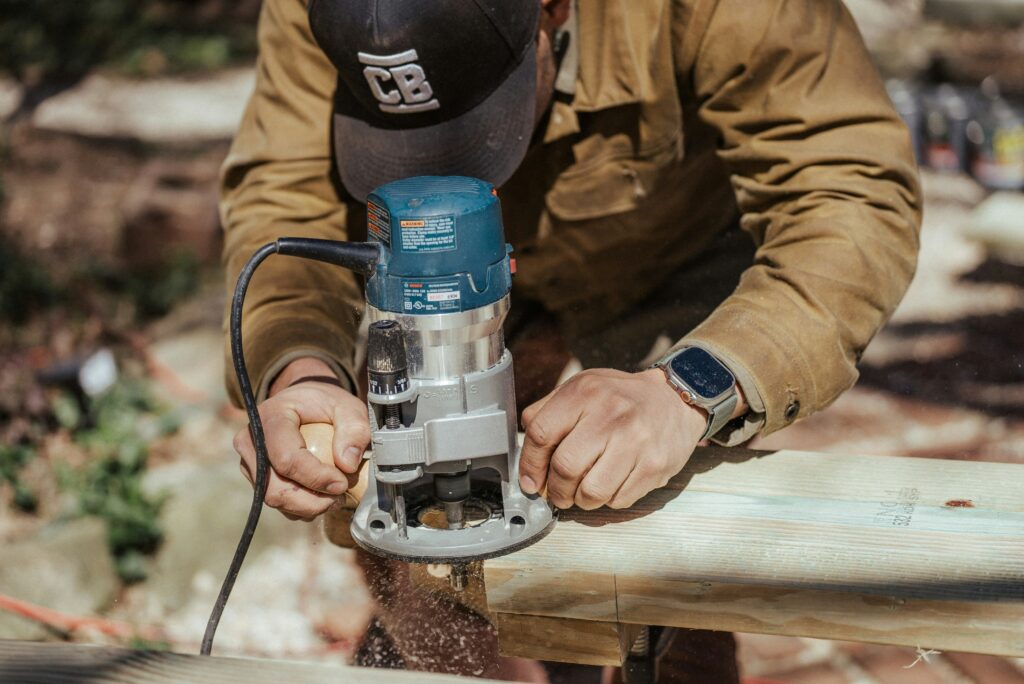
- Wood Router
A wood router is a high-speed cutting tool. It hollows out areas, creates edges, and decorative profiles in wood. It is vital for cabinetry, joinery, and precise woodworking.
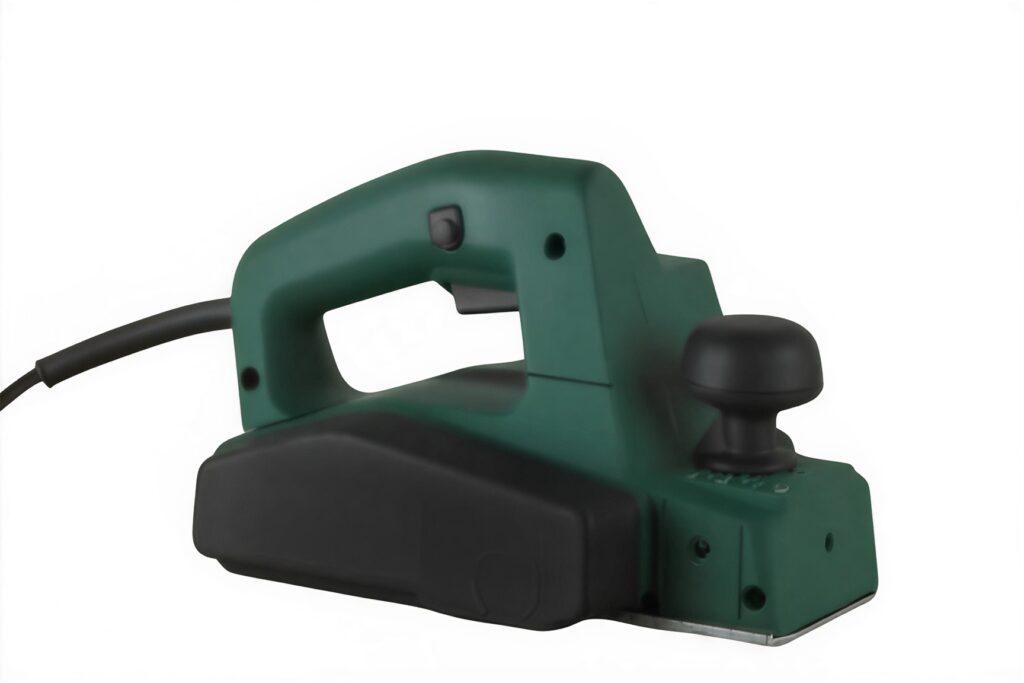
- Planer
A planer reduces the thickness of wood and produces flat, smooth surfaces. It maintains consistent board thickness and flawless finishes, making it vital for woodworking operations that demand uniformity and accuracy.
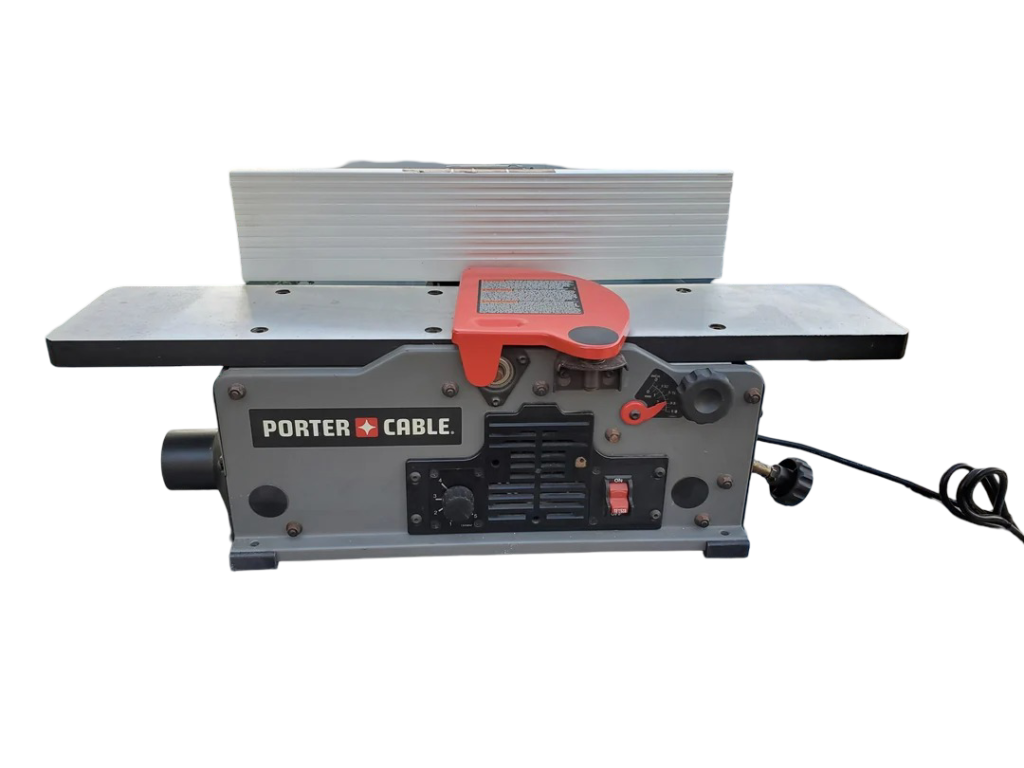
- Jointer
A jointer flattens one face of a board and squares its edges. It prepares the job for future processing. It is critical in woodworking to create straight, true edges that allow boards to fit together correctly.
Heating & Welding Tools
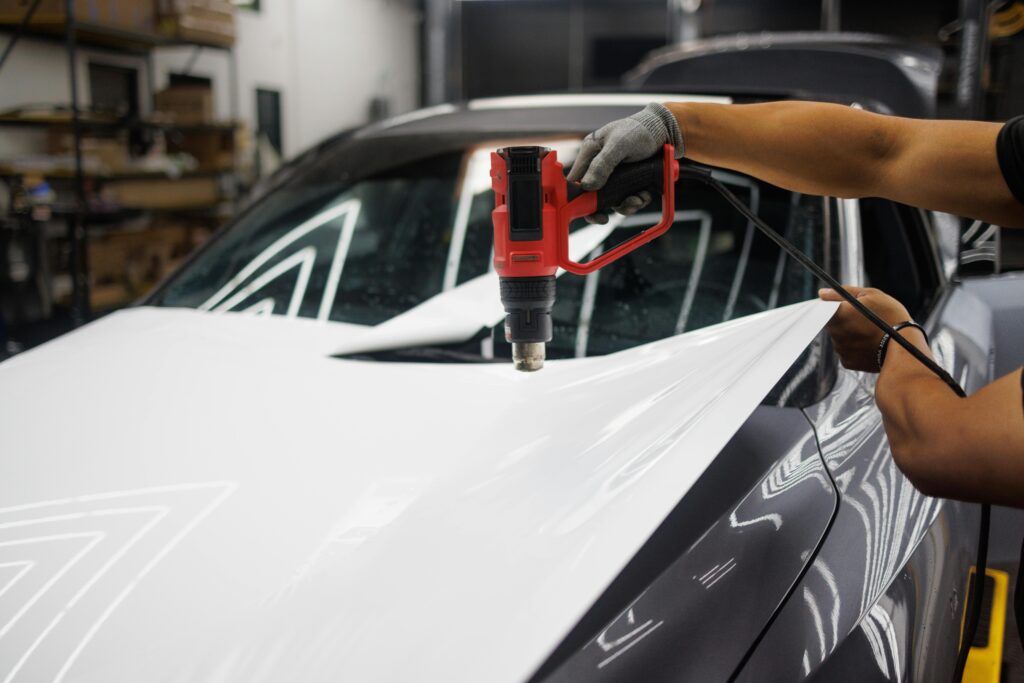
- Heat Gun
A versatile tool for applying concentrated, strong heat. Beyond paint peeling and shrink tubing, it is commonly used for bending plastics, removing adhesives, and thawing frozen pipes.
- Soldering Iron
It is used for precise metal joining. It is used in electronics to form secure connections on circuit boards. Its use in jewelry manufacturing supports delicate metalwork that requires temperature control and fine tips.

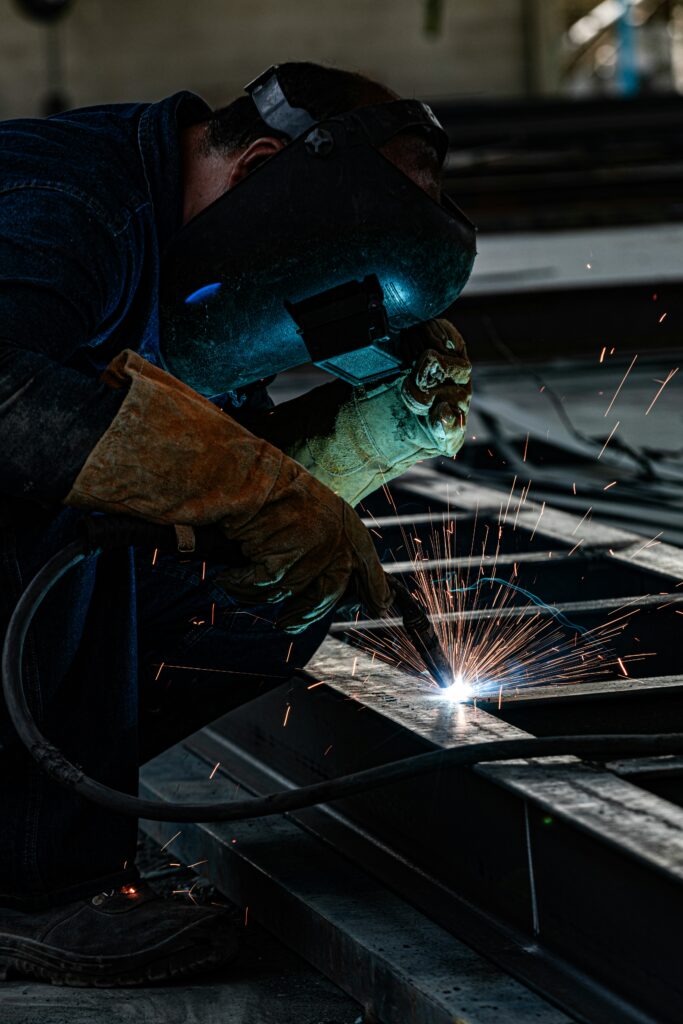
- Welding Machine
It is used to structurally join metals. The distinction between MIG (quick, versatile), TIG (precise, clean), Stick (rugged, outdoor), and Plasma (cutting) enables a broad range of metal manufacturing capabilities.
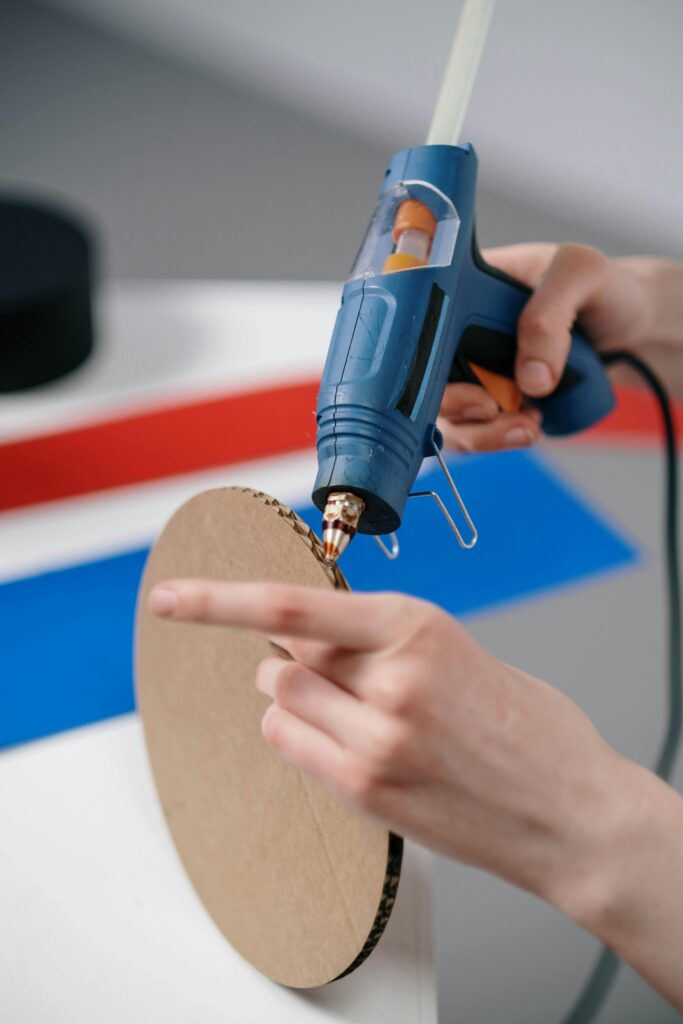
- Glue Gun
It is used for quick, non-structural bonding with thermoplastic adhesives. It is the gold standard for crafts, rapid DIY repairs, and temporary construction on materials such as wood, plastic, fabric, and foam.
How to Pick the Appropriate Power Tool for Your Needs
Correct power tool selection depends on the task, material, and frequency of use. Choosing the right tool improves efficiency, safety, and long-term value whereas the incorrect tool may affect performance and increase expenses.
Choosing Based on Job Type & Material
Beginner
Start with simple & multipurpose tools such as
- Cordless drill with hammer function – This type of drill is beginner-friendly & not as tough as hammer drills, just keep in mind to switch between the drilling mode & hammer mode when jobs require. It can be used for drilling into wood, metal, plastic, and bricks (minor works).
- Impact driver for fastening screws and assembly jobs.
These tools are simple to use, require little skill, and can handle most basic requirements.
DIY
For household projects
- Cordless drill with hammer function for drilling into wood, metal, plastic, and bricks (minor works). Use hammer drill when working on hard materials like brick (heavy works), masonry,and concrete.
- Orbital sander for surface finishing with wood, and
- Circular saw to cut through materials but be careful with them.
They provide versatility for jobs such as cutting, furniture assembling, wall mounting, and minor adjustments.
Construction
Heavy-duty specialized tools such as
- Hammer drills or rotary hammers (SDS Plus or SDS Max for tough work)
- Angle grinders for cutting rebar, concrete blocks, and steel sections
- Saws like – reciprocating saw, circular saw, jigsaw, miter saw, table saw, etc for different levels of cutting
- Impact wrenches for bolting and riveting steel connections and
- Oscillating multi-tool, nailers.
These tools offer a great deal of durability, and continuous operation for hard site jobs.
Carpentry
Precision tools such as
- Drills (twist or hammer or rotary hammer drills depending on the job),
- Circular saw for wood and framework, jigsaw and reciprocating saw for precision cuts, and
- Electric sander for surface preparation.
These tools enable for precise cutting, contouring, and assembly for furniture and structural work.
Electrical
Compact tools such as
- Drill for drilling through materials and right-angle drills for tight places,
- Saws like – circular saw, band saw etc for cutting, and
- Cordless screwdriver for driving screws.
These tools offer a great deal of durability, and continuous operation for hard site jobs.
Automotive Repair
Use specialized tools such as
- Impact wrench to tighten or loosen lug nuts and heavy bolts,
- Ratchet for repeated tightening and loosening bolts and nuts even in restricted areas, and
- pneumatic tools to perform torque-intensive maintenance tasks.
Choosing Based on Use Frequency
- Occasional use: Select affordable, lightweight tools.
- Regular use: Mid-range tools with better durability.
- Heavy/professional use: High-powered, brushless, and industrial-grade tools for long-term performance.
For light duties(occasionally or regular) entry-level tools with 12 or 18V batteries will be enough. However, for professional applications consider using batteries with more voltage than 18V.
What are the Common Mistakes to Avoid While Choosing a Power Tool?
- Purchasing overly powerful tools for simple tasks.
- Ignoring material compatibility and tool specs.
- Not considering the frequency of use or the work required
- Overlooking safety features and ergonomics.
- Purchasing incompatible battery systems for cordless instruments.
Power Tool Accessories
Power tool accessories include attachments such as bits, blades,discs, and clamps, guides & vises that improve tool performance, precision, and versatility. The appropriate accessory determines how well a tool can drill, cut, grind, sand, or polish various materials.
Bits
Bits are necessary for drilling holes and driving fasteners. Drill bits (General Purpose Drill Bits, Masonry Bits, Spade Bits, and Step Bits) are available in High-Speed Steel (HSS), cobalt, and carbide-tipped options depending on various applications and durability levels.

Impact driver bits are designed for high-torque “impact” tools (hex shanks) using specific steel that can bear hammering stress without breaking. Torx/star-drive, Phillips, square (Robertson), slotted, Pozidriv (PZ), and nutsetter bits are popular. They are often coated with black oxide or titanium for heat resistance and durability.
Blades
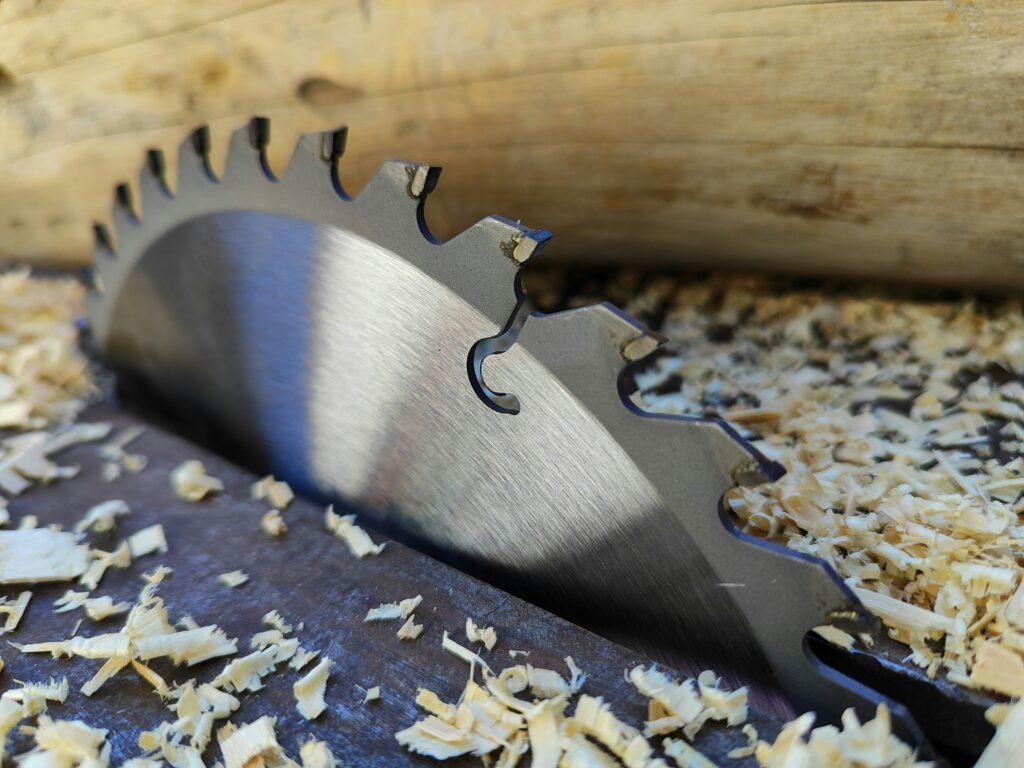
Blades classified by saw type (reciprocating or jigsaw, circular saw, table saw, chop saw, and miter saws) cut through wood, metal, plastic, or brick. HSS blades are suitable for softer materials, whereas carbide or diamond-tipped blades can handle tougher materials such as metal, concrete, or tiles, delivering clean and precise cuts.
Discs
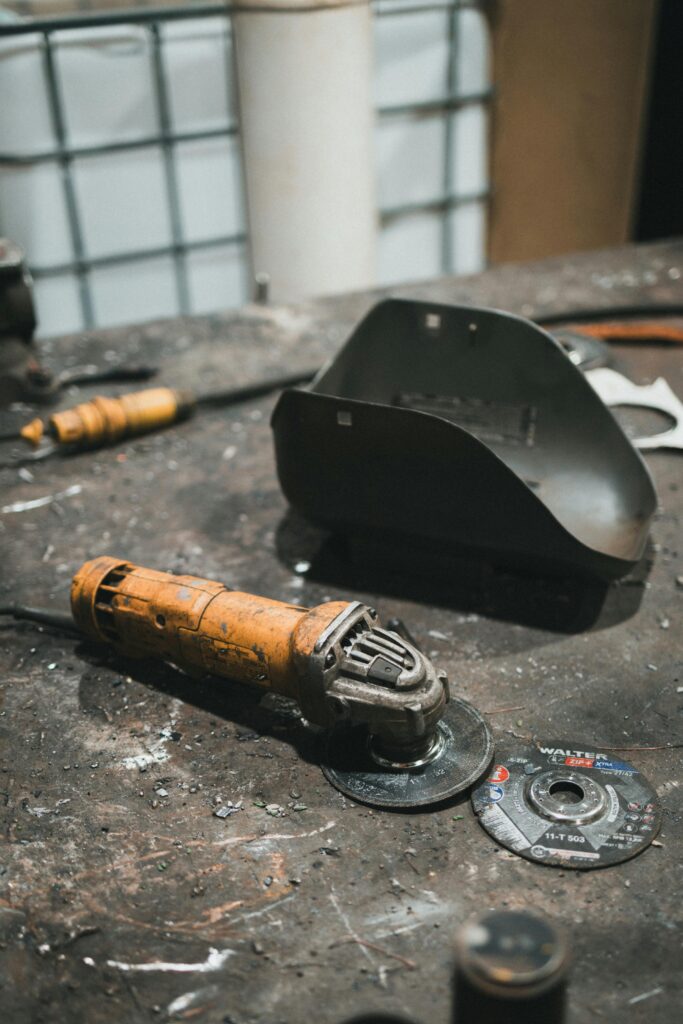
Discs are flexible attachments that grinders and sanders use to shape, cut, smooth, and polish surfaces. Different discs have been designed for specific materials (Metal, Wood, Concrete, Tile, Masonry, Plastic). They have varying grit levels for rough grinding or fine polishing.
Clamps, Guides & Vises
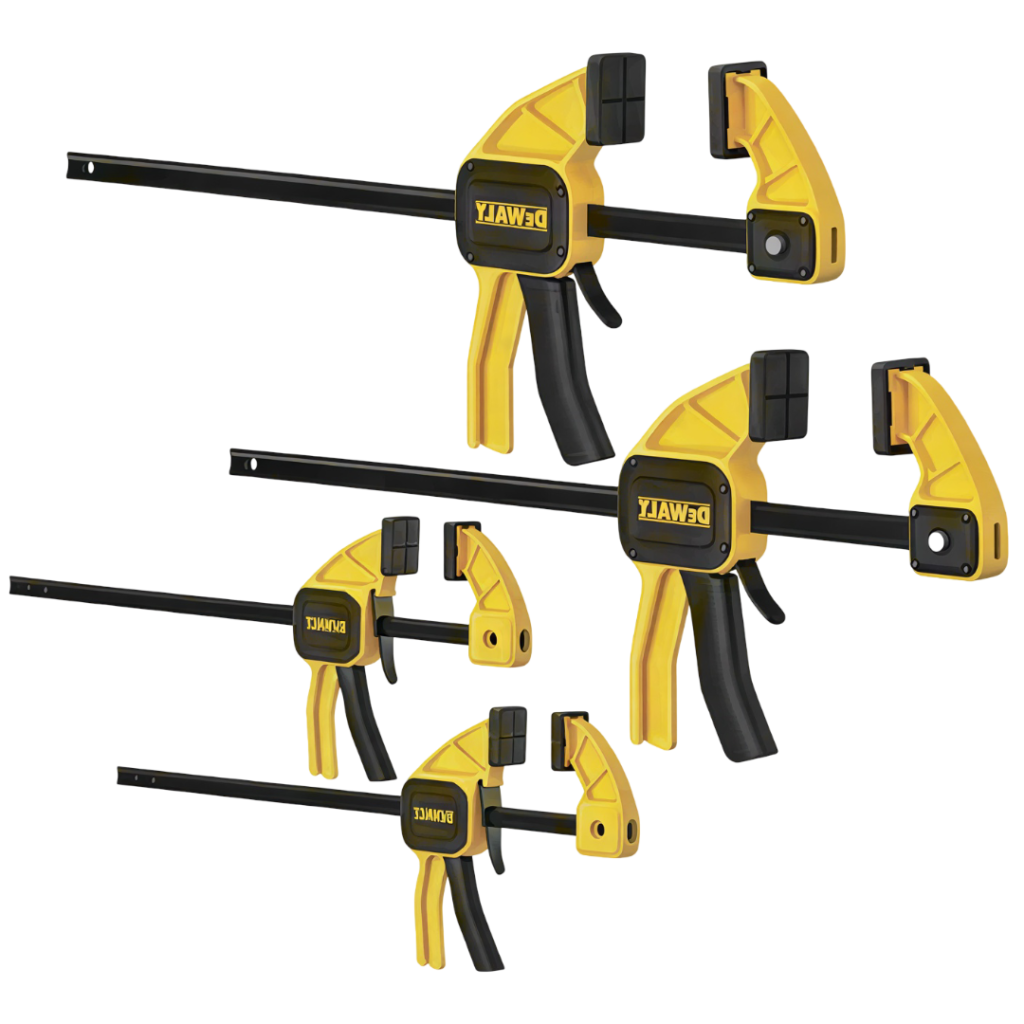
Clamps (Ratcheting/Quick Bar Clamps, C-Clamps/G-Clamps, Corner/Angle Clamps, Spring Clamps, Drill Press Clamps), vises, and guides securely keep workpieces in position during operation. These accessories ensure safety and accuracy. They are necessary for precise cutting, drilling, and shaping operations.
Safety considerations
Read manuals thoroughly before using power tools
Always read the product’s manual to understand the tool’s functionality, safety features, and appropriate operation. Following the instructions prevents potential dangers and helps ensure correct application.
Use proper PPE
Wear safety goggles, gloves, ear protection, and dust masks to protect yourself from debris, noise, and dangerous particles generated during operation.
Ensure proper workplace environment
Work in a well-lit, clean, and clutter-free place. Remove any loose cords, slippery materials, or obstacles to avoid accidents.
Properly store tools when you’re not using
Unplug tools after use and keep them in a dry, secure location to avoid damage or unwanted access.
Inspect tools before every use
Check for faulty cables, loose connections, and damaged components. Make sure the safety guards and switches are in working order before using the tool .
Use task-specific tools
Always use the appropriate tool and accessories for the material and job to ensure efficiency, safety, and peak performance.
Maintain & control
Maintain a tight grip on tools. Use both hands when necessary. Keep your feet steady to avoid slides, loss of control, and injuries.
Maintenance & Repair
Regular cleaning
Clean the tools to clear out any dust, debris, or grease after each use. Use brushes or a vacuum to clean inner parts and use a damp cloth for the external body.
Lubrication
Apply lubricants to moving parts to reduce friction, prevent wear.
Blade, Bit, and Accessory Care
Inspect the blades, bits, and discs on a regular basis. Sharpen or replace worn-out attachments.
Cord and Battery Inspection
Check power cords for fraying and batteries for damage. Replace faulty components to avoid potential dangers.
Proper Storage
Use toolboxes, cabinets, or pegboards to keep tools cold and dry. Keep them organized and safe from dampness and harsh temperatures.
Professional Servicing
Professional servicing is recommended for complex issues or heavy-duty equipment to preserve performance and extend tool lifespan.
The Role of Power Tools in the Present days
Power tools are crucial for increasing efficiency, precision, and productivity in construction, woodworking, metalworking, and home improvement operations. Understanding their different types, proper usage, safety and maintenance practices leads to greater results and lower risks. Investing in high-quality tools improves performance, durability, and long-term value, while also facilitating faster, safer, and more professional work outputs.